
Last updated November 15, 2026
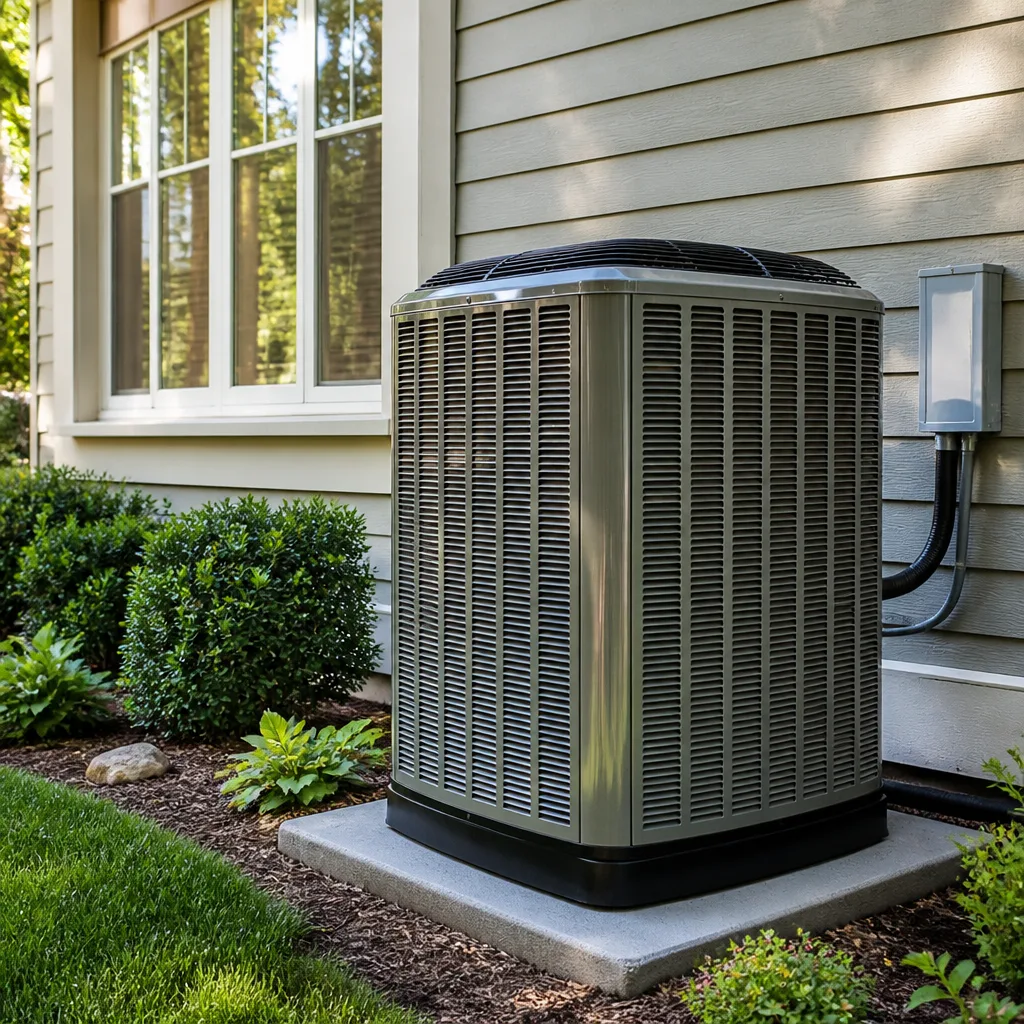 AC repair
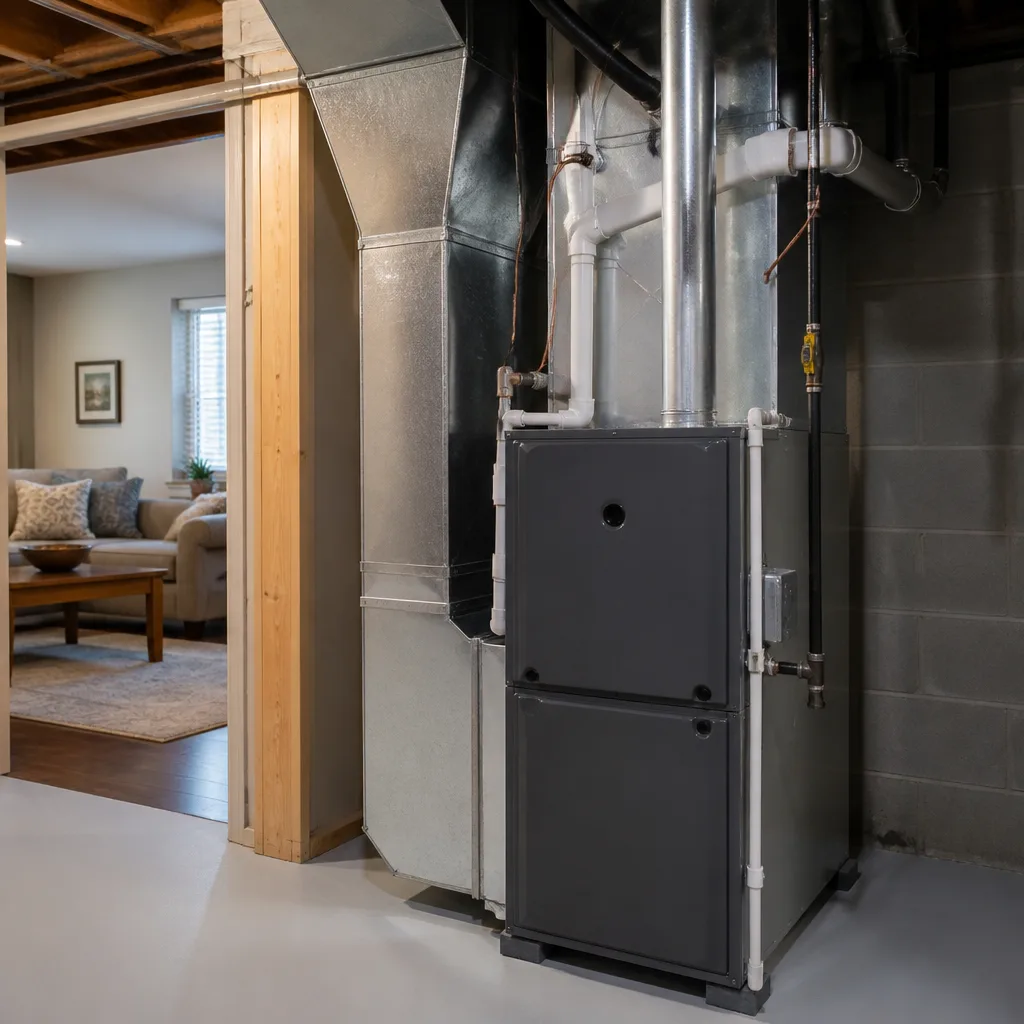 Furnace & heating
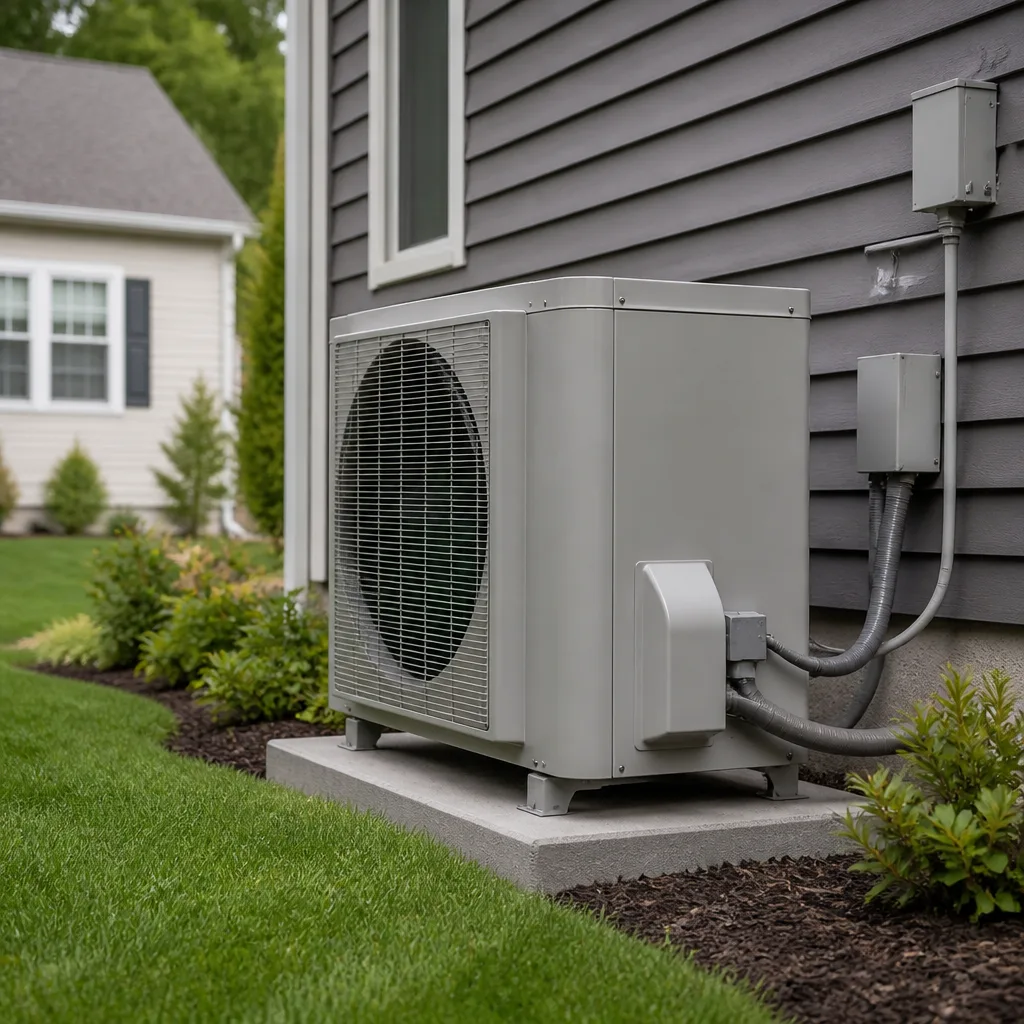 Heat pumps
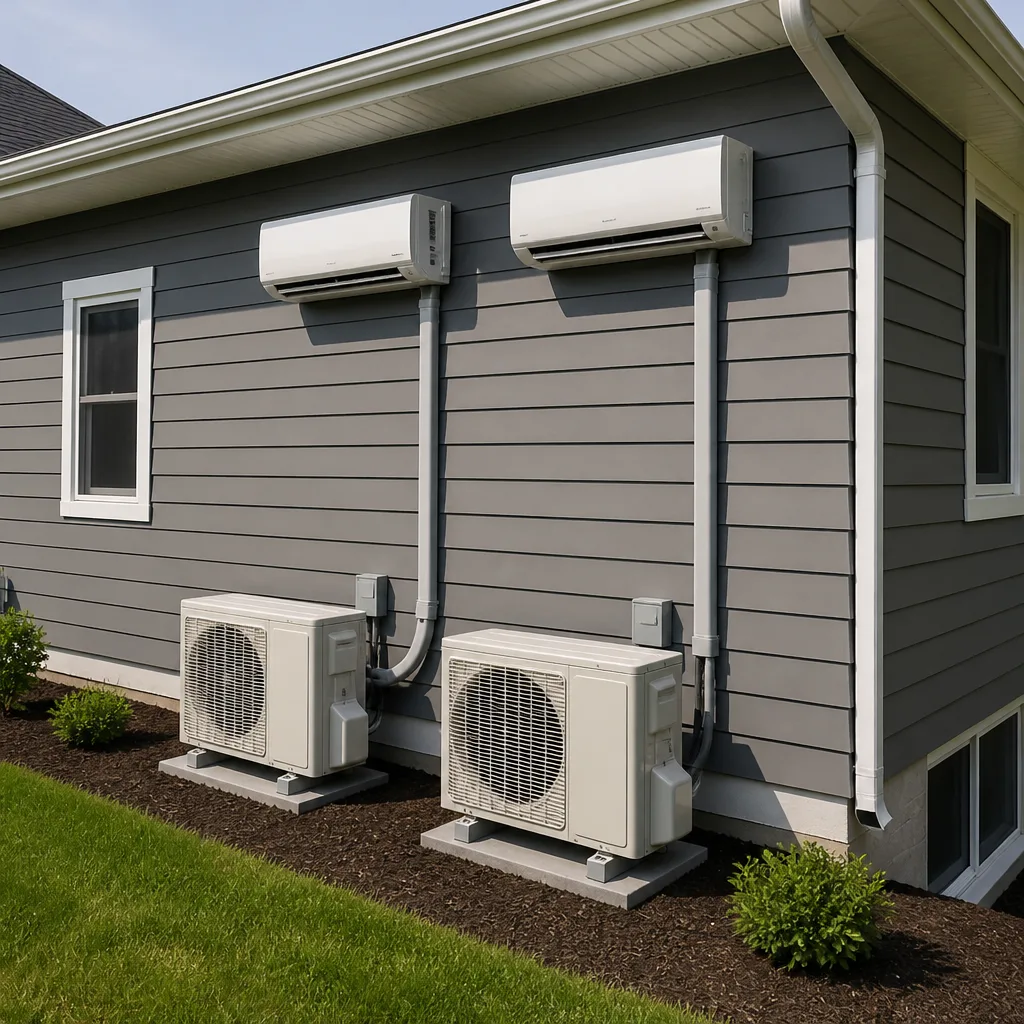 Ductless mini splits
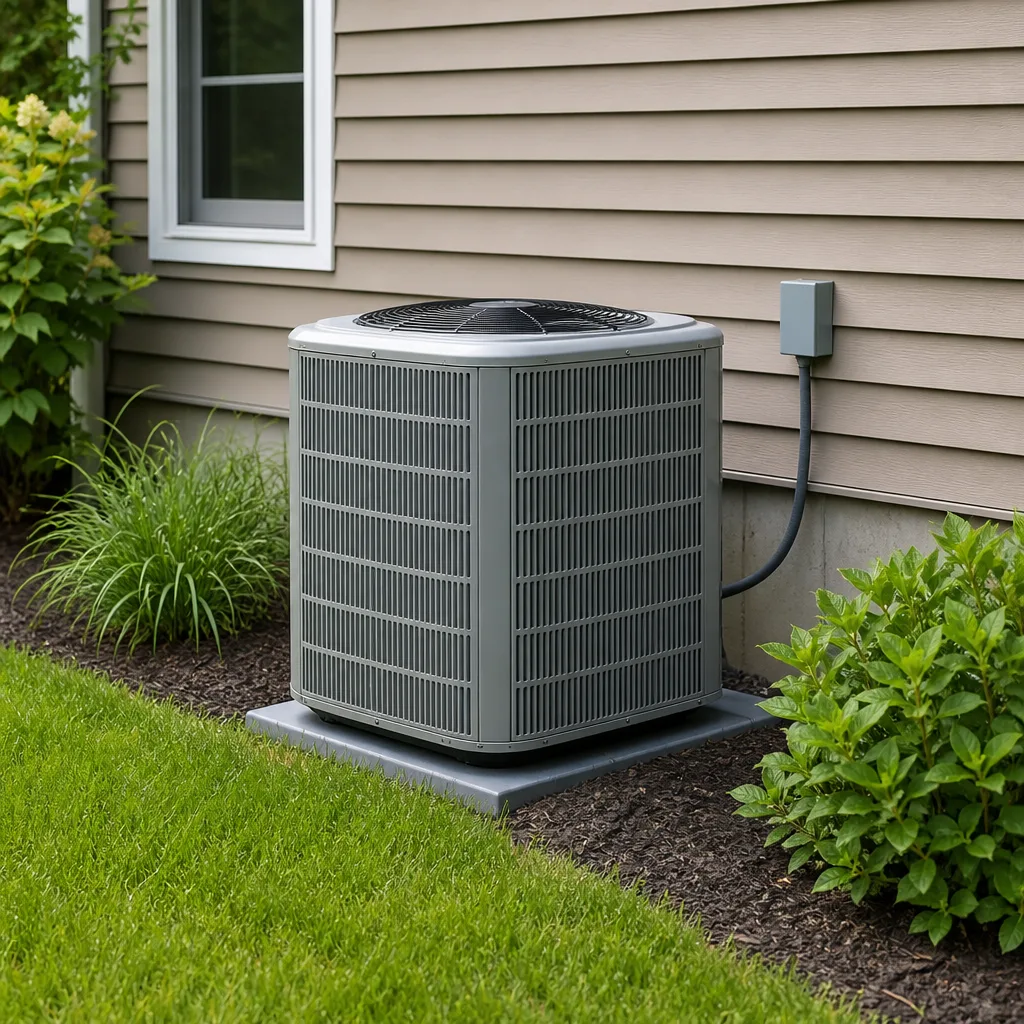 Carrier
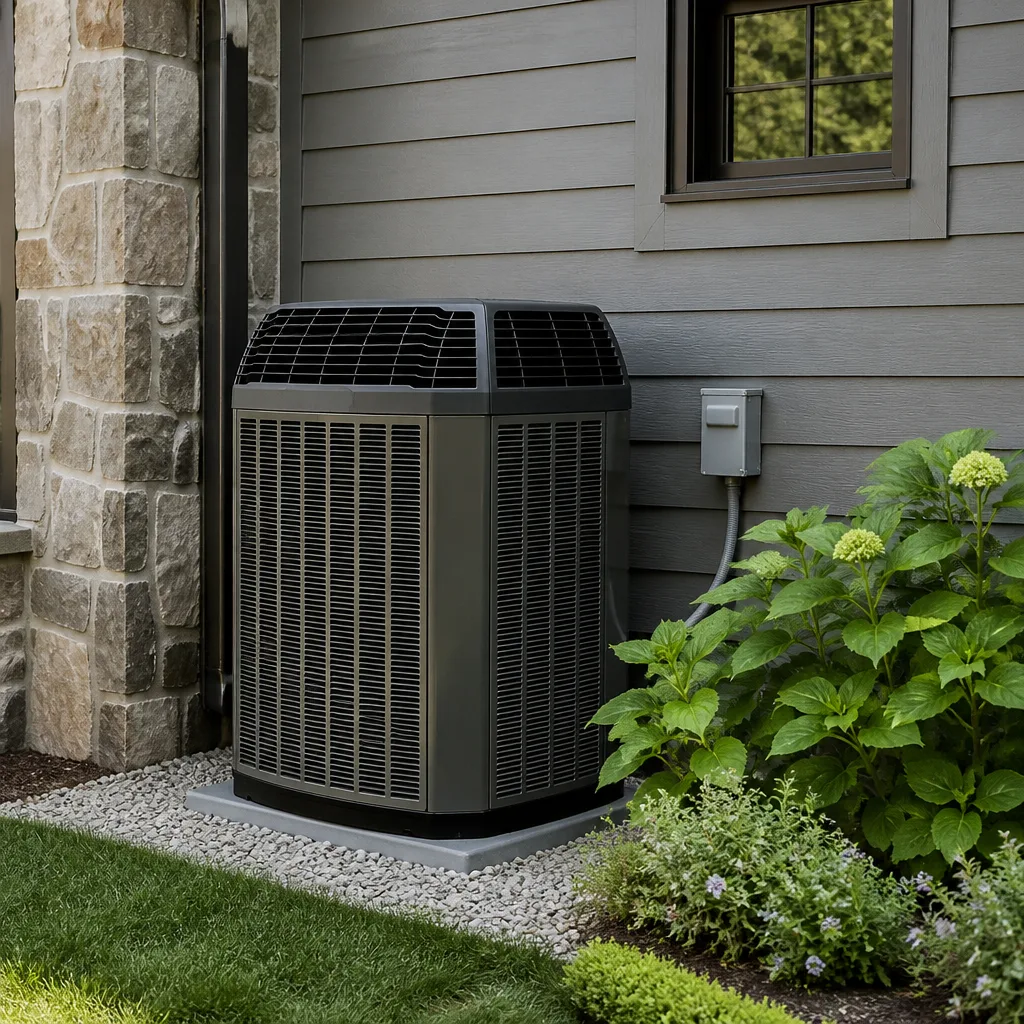 Trane
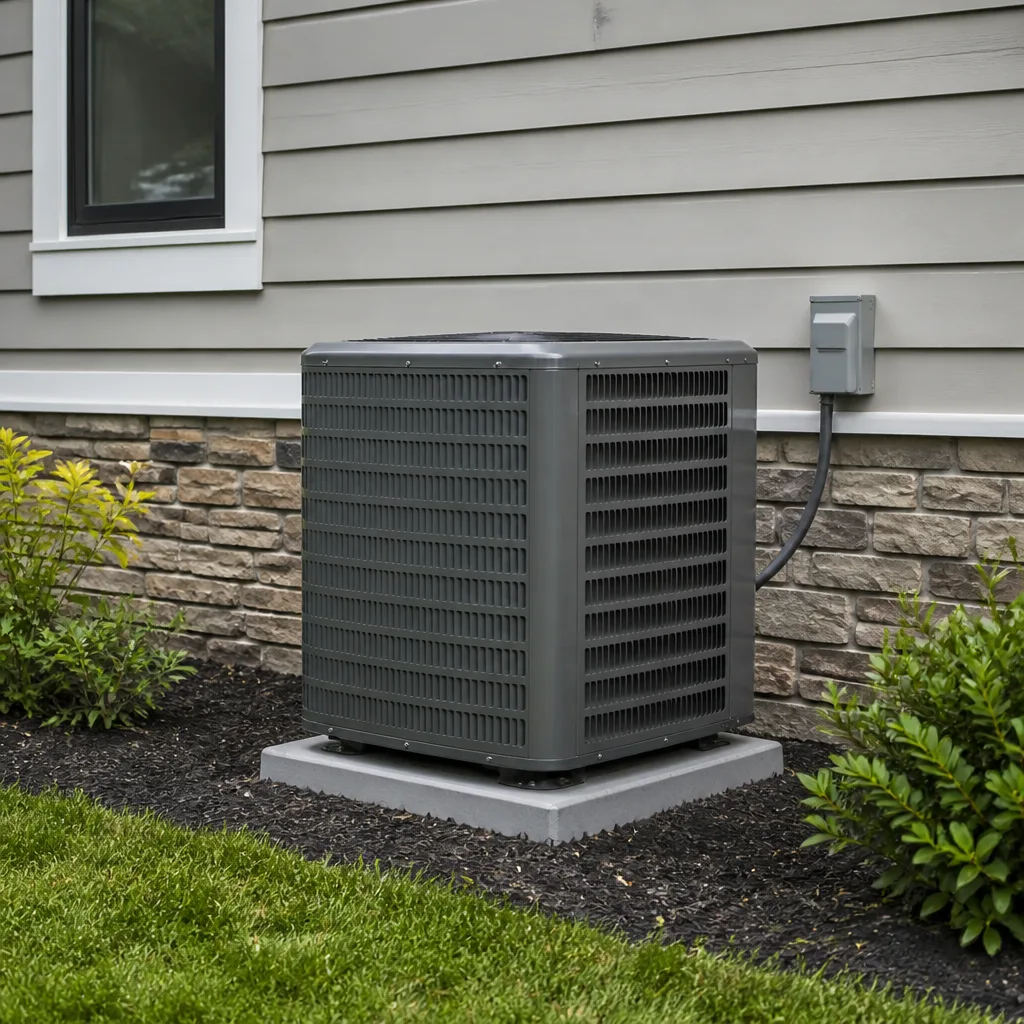 Goodman
Seasonal tune-up and full diagnostic on your Carrier, Trane, or Goodman system - readings shown to you before any repair is proposed
Diagnosis first, numbers second - you approve the repair price before a single part goes in.
Get your free estimateHow to Hire an HVAC Contractor in Lewisville: A Step-by-Step Guide
If the first question a contractor asks is “How old is your system?” instead of “What is it doing?” – or not doing – that tells you where the conversation is headed. In Lewisville, the most expensive hiring mistake isn’t picking someone unlicensed. It’s choosing a contractor whose business model depends on selling equipment, because that model creates a built-in financial reason to recommend replacement when a repair would do. This guide walks you through screening for that bias before anyone shows up at the door: verifying a Texas license in two minutes, asking the right vetting questions, reading a diagnostic report, and getting a second opinion without burning bridges.
Quick Answer
To hire an HVAC contractor in Lewisville, verify the company’s license through the Texas Department of Licensing and Regulation (TDLR) database, confirm the business model (repair-first versus sales-driven), and insist on a written diagnostic report before approving any work. A competent technician asks what your system is doing before asking how old it is, and a trustworthy contractor hands you a written estimate that separates repair options from replacement. If a replacement is pushed immediately with no diagnosis, get a second opinion.
Styles & brands we work with
- AC repair
- Furnace & heating
- Heat pumps
- Ductless mini splits
- Carrier
- Trane
- Goodman
Table of Contents
- Step 1: Verify the License Before You Schedule
- Step 2: Ask the Five Diagnostic Questions
- Step 3: Screen for the Contractor’s Business Model
- Step 4: Demand a Written Diagnostic Report
- Step 5: Get a Second Opinion Without Burning Bridges
- Step 6: Understand the Repair-vs-Replace Threshold
- What Lewisville Homeowners Should Know Locally
- Common Mistakes to Avoid
Step 1: Verify the License Before You Schedule
Texas requires HVAC contractors to hold a license through the Texas Department of Licensing and Regulation, and checking that license takes about two minutes. You don’t need an account. You don’t need to call anyone. The TDLR keeps a public license search database online, and you can look up a company’s name or license number before you ever pick up the phone. Do it first. Every other step in this guide assumes the contractor is licensed and accountable for the work.
Here’s the sequence to run through:
- Go to the TDLR website and open the license search tool.
- Search by the company name or the license number on the truck or estimate.
- Confirm the license is active, not expired or suspended.
- Check that the license type matches the work – an air conditioning and refrigeration contractor license for system work.
- Note the license number and compare it to the one on your written estimate.
That last step matters more than people realize. A company can hold a valid license while a subcontractor or helper on the job does not. When the estimate arrives, the license number on the paperwork should match the company you verified. If someone hands you a card with no number, or the number returns a different name, stop. In Lewisville, where summer heat pushes systems hard and demand for AC work spikes, unlicensed operators sometimes appear in the gap. The database is your filter.
Licensing isn’t the whole story, though. A license confirms the legal minimum – the state has credentialed the business. It doesn’t tell you whether the contractor’s technicians are experienced with your specific equipment. That’s a separate check you’ll make in the next step, and it’s where the difference between a generalist and a specialist shows up.
Step 2: Ask the Five Diagnostic Questions
A competent HVAC technician asks a set of questions before recommending anything, and those questions are your best vetting tool. You can ask them yourself when you call to schedule. If the person on the phone can’t answer or won’t engage, that’s information. If they can, you’ve learned whether you’re talking to a diagnostician or an order-taker.
The five questions to expect, in roughly this order:
- What is your system doing, or not doing? – The starting question. A repair-first contractor wants symptoms before specs. A sales-driven one wants the age and the model number.
- When did it start, and did anything change? – A good technician is building a timeline. A recent power surge, a new thermostat, a filter change, or a strange noise that began after a storm all narrow the diagnosis.
- How does the system behave at different times of day? – Cooling that works at 8am but fails at 3pm points to a different problem than cooling that never works. In a Lewisville summer, this distinction separates a refrigerant issue from an airflow or compressor problem.
- What have you already tried or had done? – This prevents redundant work and lets the technician build on what’s known. It also flags whether you’ve been through a previous repair attempt.
- What are the symptoms versus the root cause? – A refrigerant leak is a symptom of where the leak is, not the diagnosis itself. A technician who stops at the symptom hasn’t finished the job.
You can use these as a screening script. When you call a Lewisville contractor, describe the problem and see whether the conversation stays on symptoms or jumps to system age and replacement pricing. If the person on the phone asks about the age of your unit before asking what it’s doing, you’ve learned something about the business model. If they ask what brand and year your system is, that’s fine – it matters for parts – but the diagnostic questions should come first or alongside.
There’s a practical reason to expect this order. Our AC repair work begins with symptoms because fixed systems often fail in predictable ways that don’t depend on the age of the unit. Knowing whether your Carrier or Trane system is 5 years old or 15 helps with parts, but it doesn’t replace diagnosis. The technician should be able to explain why they’re asking each question, not just collect answers.
Step 3: Screen for the Contractor’s Business Model
Two HVAC companies can hold the same license and run completely different businesses, and the difference shows up in how they get paid. Some contractors earn most of their revenue from equipment installations and commissions on replacement sales. Others earn it from repair and diagnostic work. Those two models produce different incentives, and you can usually tell which one you’re dealing with before anyone shows up.
Here are the signals:
- Where the conversation starts. A repair-first contractor talks about what’s broken. A sales-driven one talks about system age, efficiency, and replacement timelines.
- What gets quoted first. Ask for a repair price and a replacement price. The order they present, and how much airtime each gets, tells you where the money is.
- Whether repair is framed as a real option. If repair is offered as a temporary stopgap that’s likely to fail, while replacement is the “smart long-term choice,” that framing is a sales tactic, not a diagnosis.
- Commission language. Ask directly: are technicians paid on repair work, salary, or on equipment sold? A straight answer is a good sign. Evasion is a red flag.
- Brand exclusivity. A contractor tied to one manufacturer has a built-in reason to push that brand. A brand-agnostic contractor has no single manufacturer to steer you toward.
None of this is about accusing anyone of dishonesty. Most HVAC contractors are straight with customers, and the sales-driven model isn’t illegal – it’s just a different business. The problem is informational: if the person diagnosing your system gets paid when you buy a new one, their diagnosis deserves more scrutiny. You’re not being paranoid. You’re matching the incentive to the stakes.
One way to test this: ask what brand familiarity means in practice. A contractor who names specific brands they work on – say American Standard, Carrier, Trane, or Lennox – and can describe how those systems are built differently is signaling genuine equipment knowledge. A contractor who deflects the brand question toward a replacement quote hasn’t demonstrated anything about repair capability. When we say we work on the brand you already have, we mean the diagnostic path starts from what’s installed, not from what’s for sale.
Step 4: Demand a Written Diagnostic Report
Every HVAC job should come with a written diagnostic report, and verbal-only assessments are a red flag. The report is the difference between a contractor who can be held to what they found and one who can change the story after the fact. It costs the contractor nothing but a form, and it protects you both.
A complete written report includes:
- The complaint as reported. What the system was doing, in your words, before anyone touched it.
- What was measured. Temperatures, pressures, electrical readings, airflow – whatever tests the technician ran, with the actual numbers.
- The diagnosis. The specific failed component or fault, not just “compressor issue.” A good report names the part and the test that confirmed it.
- Repair options, priced separately. If there are two ways to fix it, both should be listed with prices.
- A replacement recommendation, if there is one, with a reason. If replacement is recommended, the report should explain why repair won’t hold up – not just that the unit is old.
- The license number and company name. So the report can be tied to the licensed business.
Why written matters so much: HVAC diagnoses involve mid-procedure decisions. A verbal “it needs a new blower motor” can turn into “actually it’s the whole system” after the technician is off the phone with the office. A written report fixes the diagnosis at a moment in time. If the recommendation changes, you have a document to compare against.
Ask for the report before authorizing work. If the contractor resists – “we’ll send it over after” – that resistance is itself a data point. In our experience, contractors who run flat-rate repair businesses have no trouble producing a written report because the report is part of the job, not an obstacle to it. Lewisville homeowners should treat the written report as a standard expectation, not an unusual request. If you’re comparing contractors, this is where the comparison gets real.
Step 5: Get a Second Opinion Without Burning Bridges
Getting a second opinion on a replacement recommendation is a normal, polite step, and you can do it without damaging the relationship with the first contractor. The trick is framing. You’re not rejecting anyone. You’re collecting the information a major purchase deserves. Most professionals understand this because they’d do the same thing with their own home.
Here’s how to handle it:
- Ask the first contractor for their written report and diagnosis before you decide anything. You’re entitled to it.
- Tell the first contractor, honestly, that you’re getting a second opinion before committing to a replacement. No apology needed.
- Call the second contractor and describe the diagnosis you were given. Ask whether they’d reach the same conclusion and whether repair remains an option.
- Bring the first contractor’s report to the second appointment. A good diagnostician will read it and either agree or explain what they’d test differently.
- If the second opinion agrees replacement is needed, you have confirmation. If it finds a repair path, you’ve saved real money and learned the difference between the two businesses.
- Circle back to the first contractor with the second diagnosis if you prefer to keep the relationship. A professional won’t take offense at being shown evidence.
The second opinion is especially useful when the first recommendation arrives before any diagnostics. If you’ve been quoted a replacement before anyone put gauges on your system, a second call is not optional – it’s due diligence. This is the scenario the whole guide is built around: the recommendation that precedes the diagnosis. In Lewisville, where cooling failures hit hard in July and August, the temptation to say yes to whatever’s presented rises with the temperature. A second call costs you a day and can save a system.
One practical note: the second contractor should not need to re-do work the first performed, but a competent second opinion will often want to verify the key measurements. That’s not a criticism of the first visit. It’s how diagnostics work. AC installation is a significant purchase, and no one should commit to it on the strength of a single verbal assessment.
Step 6: Understand the Repair-vs-Replace Threshold
“Repair or replace?” is the question the entire hiring process is designed to answer, and the honest answer depends on three things: the cost of the repair relative to a new system, the age and condition of the equipment, and whether the underlying fault is likely to recur. A contractor with a repair-first business will walk you through all three. A sales-driven contractor will usually skip to the third and tell you it will.
The framework:
- Repair wins when the fault is a single failed component, the repair cost is a modest fraction of replacement, and the rest of the system is in sound condition. A capacitor, a contactor, a blower motor, or a refrigerant line repair often falls here.
- Repair is borderline when the cost approaches half the replacement price or the system has had multiple failures in a short window. This is where the written diagnostic report matters most, because the pattern of failures is part of the diagnosis.
- Replacement is defensible when a major component has failed, the equipment is at the end of its expected service life, and the repair would be followed by more repairs within the same season.
None of these are hard cutoffs, and any contractor who presents one as certain is overselling the certainty. What you should hear is a reason attached to the recommendation: “The compressor’s failed and the system is at an age where the second major failure usually follows within a year or two” is a diagnosis. “It’s old and it’s time” is not. The furnace side works the same way – a heating failure in a Lewisville winter can be a repair or a replacement, depending on what’s actually failed. We cover both heating and cooling under one company name, so the winter call doesn’t mean starting the vetting process over with a second contractor.
If the recommendation is replacement, ask for the brand and model of the proposed new system and whether the quote is for equipment alone or installation. A written fixed price for AC installation should cover the full job, not just the box going on the pad. That’s another screening point. Vague or itemized-with-hooks pricing is a sign you’re talking to a sales process.
What Lewisville Homeowners Should Know Locally
Lewisville sits in the DFW metroplex, and the climate here shapes HVAC hiring in specific ways. Summer heat puts heavy demand on cooling systems, and demand for technicians spikes at the same time. Choosing a contractor in a July heat wave is harder than choosing one in April, because scheduling pressure pushes homeowners toward whoever answers the phone first rather than whoever is best suited to diagnose the system. If you can, screen contractors before you need one.
Winter in North Texas is mild, which has a side effect worth understanding. Furnaces in Lewisville often get less attention than the AC, because the heating season is short and the failure mode is less obvious. A furnace that ran fine last winter may not have been checked since, and small faults can sit quietly for a season. When a heating failure does hit – typically during a cold snap when everyone’s system is running – the same vetting steps apply. The climate doesn’t change the model bias problem. If anything, the shorter heating season makes the sales-pitch dynamic more acute, because contractors who sell replacements have less service work to keep them busy in the off-season.
Housing stock across Lewisville varies from older single-family homes to newer construction, and the age of the equipment doesn’t track the age of the house. A recently built home can have a system installed with builder-grade equipment, and an older home can have a recently replaced unit. That’s why the “how old is your system?” question is a poor starting point. It doesn’t tell you what’s wrong. Only diagnostics do.
The metroplex also brings a dense contractor market. More options is good, but it makes screening more important, not less. You can’t interview ten contractors. You can verify the license, ask the diagnostic questions, and read the business model in about twenty minutes. Spend that time, and the rest tends to sort itself out. If you want the local picture before you start, our Lewisville coverage lays out the service area and what we handle.
One more local consideration: DFW code enforcement and permitting vary by city, and Lewisville is no exception. Some replacement work requires a permit and inspection; some repairs don’t. Ask the contractor whether the work quoted requires a permit, and if they’re unsure, that’s worth checking with the city before you authorize anything. A licensed contractor should know the answer for routine jobs and should be willing to confirm rather than guess.
Common Mistakes to Avoid
- Picking whoever answers first during a heat wave. In a Lewisville summer, the fastest callback is often the most sales-driven contractor, because speed of response is part of the pitch. Verify the license and ask the diagnostic questions even when you’re hot and frustrated.
- Approving work on a verbal diagnosis. If there’s no written report, there’s no fixed target to hold the contractor to. Ask for the written report and read it before you agree to anything.
- Treating “how old is your system?” as a reasonable opening question. It isn’t. Age matters for parts and for context, but it doesn’t diagnose the fault. Watch what the first question actually is.
- Assuming a single brand on the truck means expertise. A contractor tied to one manufacturer can still be excellent, but their recommendation will always lean toward the brand they carry. Brand-agnostic contractors have less to gain from steering you.
- Skipping the license check because the reviews look good. Reviews don’t confirm a license, and a company with a great reputation on one system can still have an expired license at the state level. Two minutes on TDLR closes that gap.
- Replacing before diagnosing. If a replacement quote shows up before gauges or a written diagnosis, treat the quote as a sales proposal, not a repair estimate. Get a second opinion.
- Trying to handle refrigerant or electrical work yourself. Refrigerant handling and electrical diagnosis involve real hazards – refrigerant under pressure, live circuits in the air handler. This is not a DIY repair. Licensed professionals carry the training and equipment for it, and the safety risk isn’t worth the savings.
See the difference
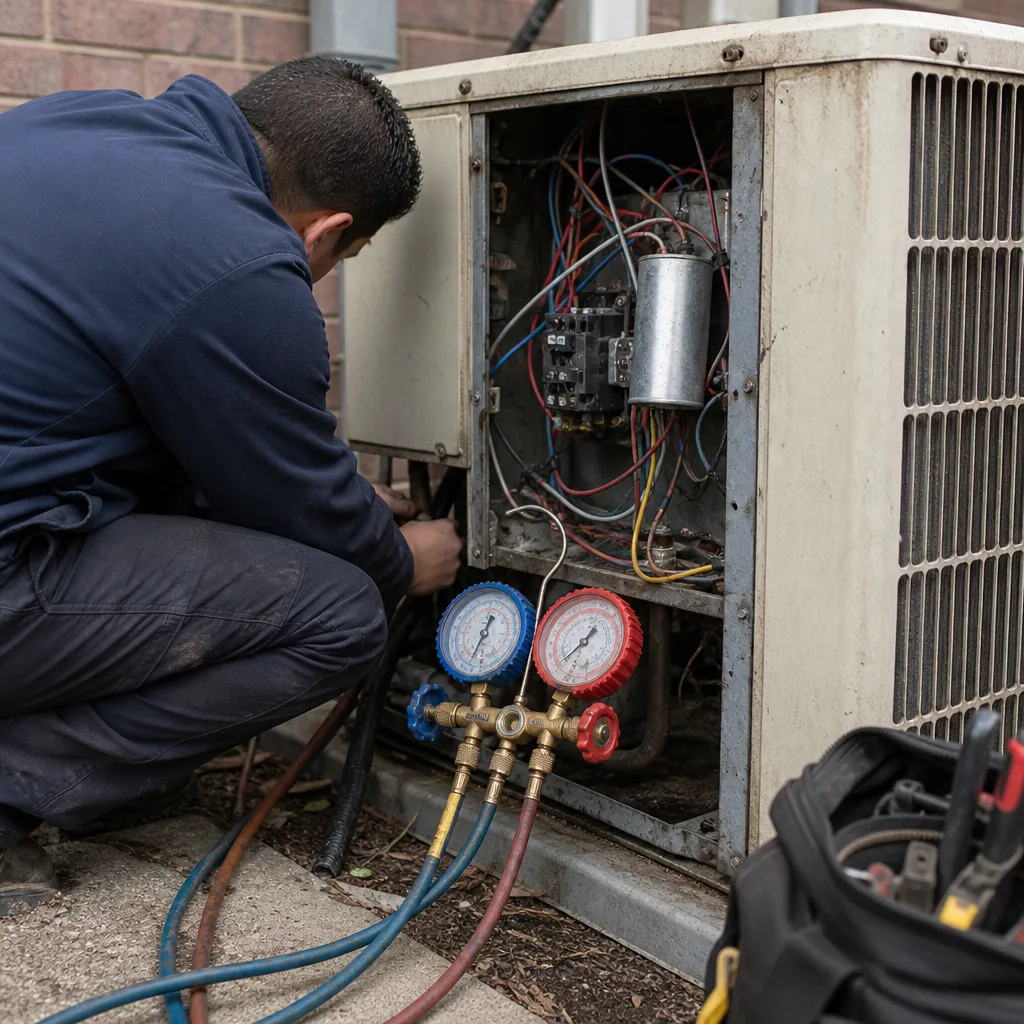 Before
 After
 Before
 After
 Before
 After
When to Call a Professional
Call a professional any time your system is failing in a way that involves refrigerant, electrical components, or gas. Those systems carry real hazards – pressurized refrigerant, live electrical circuits in the air handler and condenser, and gas lines where the risk of a leak is genuine. Don’t open panels or attempt to recharge a system yourself. A trained technician has the gauges, the training, and the safety procedures for it, and the potential for serious injury makes the DIY route a bad trade every time.
Beyond safety, call when the symptoms don’t point to a simple fix – a system that runs but doesn’t cool, a furnace that cycles but doesn’t heat, strange noises or smells, or a unit that trips the breaker. Those are diagnostic problems, not user-fixable ones. If you’ve had two repairs in one season, call before the third; the pattern is telling you something.
Rutherford AC Repair offers free estimates in Lewisville – call (844) 761-3596. We answer 24/7. Fast dispatch from 7am to 7pm, Sunday through Friday. If you’re comparing contractors, we’ll show you the license, the diagnostic process, and the written report – no replacement pitch before the diagnosis.
Frequently Asked Questions
You verify it through the Texas Department of Licensing and Regulation (TDLR) public license search, which takes about two minutes. Search the company name or license number, confirm the license is active, and match the number on the written estimate to the record. This is the single fastest check you can make before scheduling, and it’s public whether the contractor likes it or not. If the license is missing, expired, or attached to a different business name, walk away. Call (844) 761-3596 for an exact quote.
The clearest red flag is a replacement recommendation before any diagnostics. Others include opening the conversation with system age rather than symptoms, framing repair as a temporary stopgap, recommending a brand tied to the company’s revenue, and refusing to provide a written diagnostic report. In Lewisville’s dense contractor market, you have enough options to screen for these signals before anyone shows up. Call us and we’ll walk you through the differences – (844) 761-3596.
Repair usually wins when the fault is a single failed component, the repair cost is a modest fraction of replacement, and the rest of the system is in sound condition. Replacement is defensible when a major component has failed and the system is at the end of its expected service life. The honest answer depends on the specific diagnosis, which is why the written report matters. Rutherford AC Repair leads with repair – fixing existing systems is our default, not a fallback. Call (844) 761-3596 for an exact quote.
A complete report includes the original complaint as reported, the measurements the technician took (temperatures, pressures, electrical readings), the specific failed component with the test that confirmed it, repair options priced separately, any replacement recommendation with a stated reason, and the company’s license number. Verbal-only assessments leave nothing to hold the contractor to. Ask for the written report before authorizing work. Call (844) 761-3596 for an exact quote – estimates are free.
Yes, and you should. Ask the first contractor for the written diagnosis, tell them honestly that you’re getting a second opinion, and bring the report to the second appointment. A good diagnostician will either agree or explain what they’d test differently. If the second opinion finds a repair path, you’ve saved the cost of a full replacement. For a second look at your system, call Rutherford AC Repair at (844) 761-3596.
Permit requirements vary by city and by the scope of the work, so confirm the requirement with the City of Lewisville before installation. A licensed contractor should know whether the job requires a permit and inspection, and should be willing to confirm rather than guess. If the contractor is unsure, that’s worth pausing on, because permit compliance is part of the job. Rutherford AC Repair handles Rutherford AC Repair‘s installation work with the permit requirements checked before scheduling. Call (844) 761-3596 for an exact quote.
The Bottom Line
The biggest hiring mistake Lewisville homeowners make is picking a contractor whose business model rewards replacement over repair. Screen for it before anyone shows up. Verify the TDLR license in two minutes. Ask the five diagnostic questions and watch whether the conversation stays on symptoms. Read the written diagnostic report before you approve anything. If a replacement is recommended before a diagnosis, get a second opinion – it’s a normal step, not an insult. Our technicians have up to 15 years of experience, we work on nine of the most widely installed residential brands, and we cover both heating and cooling under one name. Start with a free estimate, and we’ll show you the diagnosis before the recommendation.
Call (844) 761-3596 for a free estimate. We answer 24/7. Fast dispatch from 7am to 7pm, Sunday through Friday. Closed Saturday.
Written by the team at Rutherford AC Repair.