
Last updated November 15, 2026
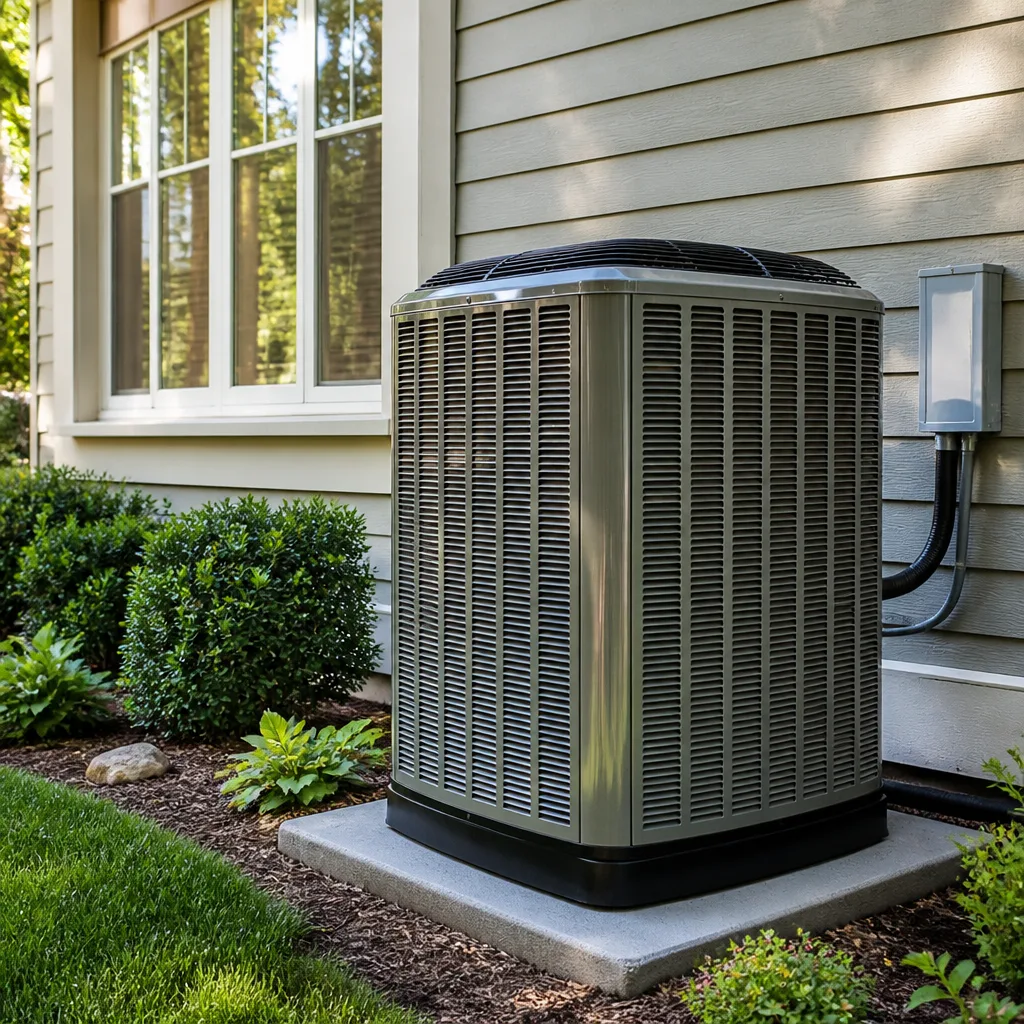 AC repair
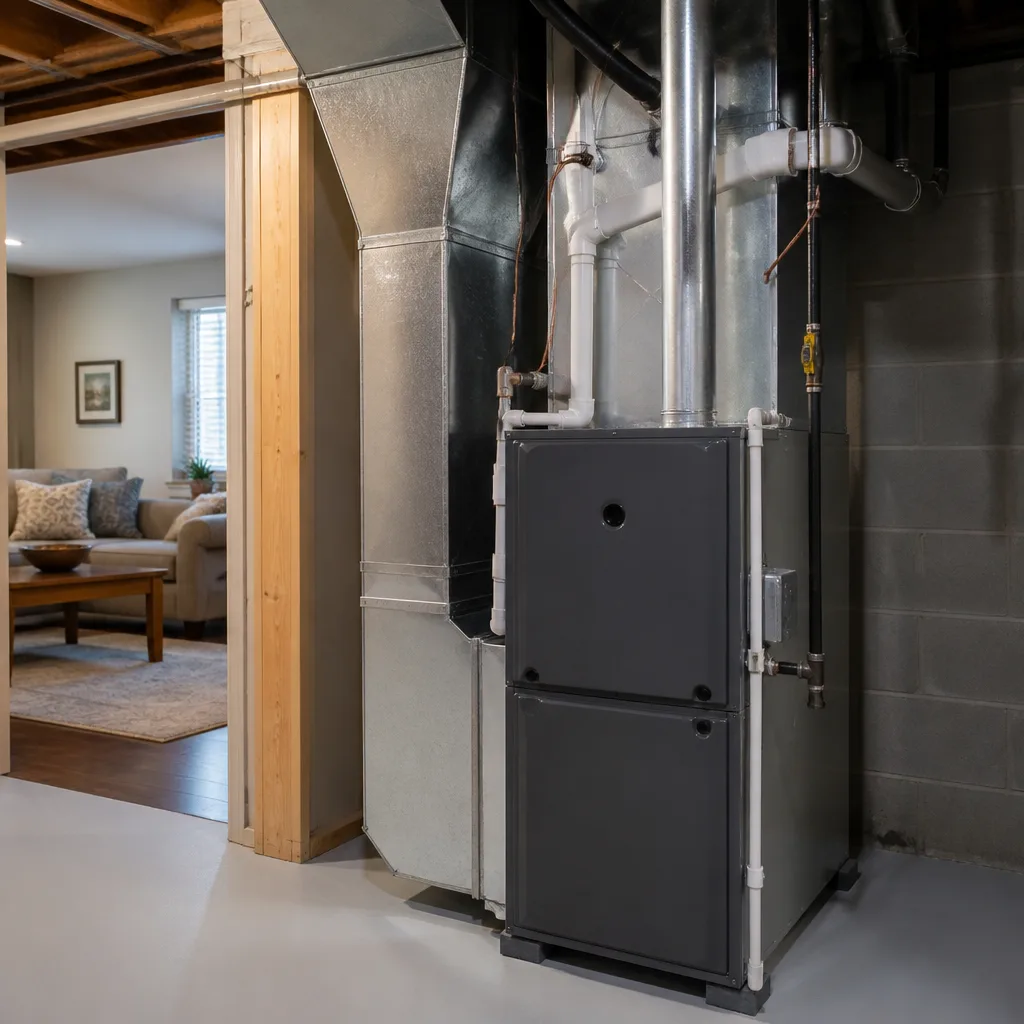 Furnace & heating
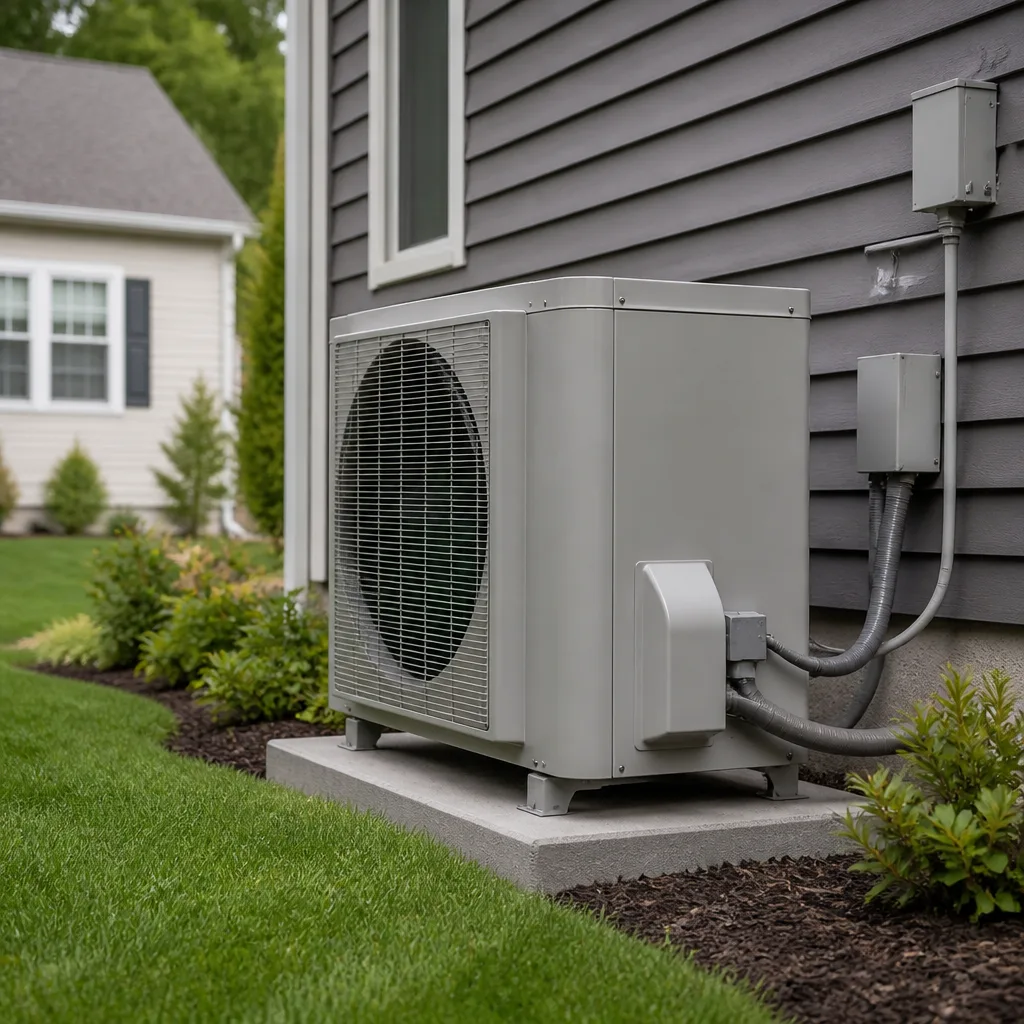 Heat pumps
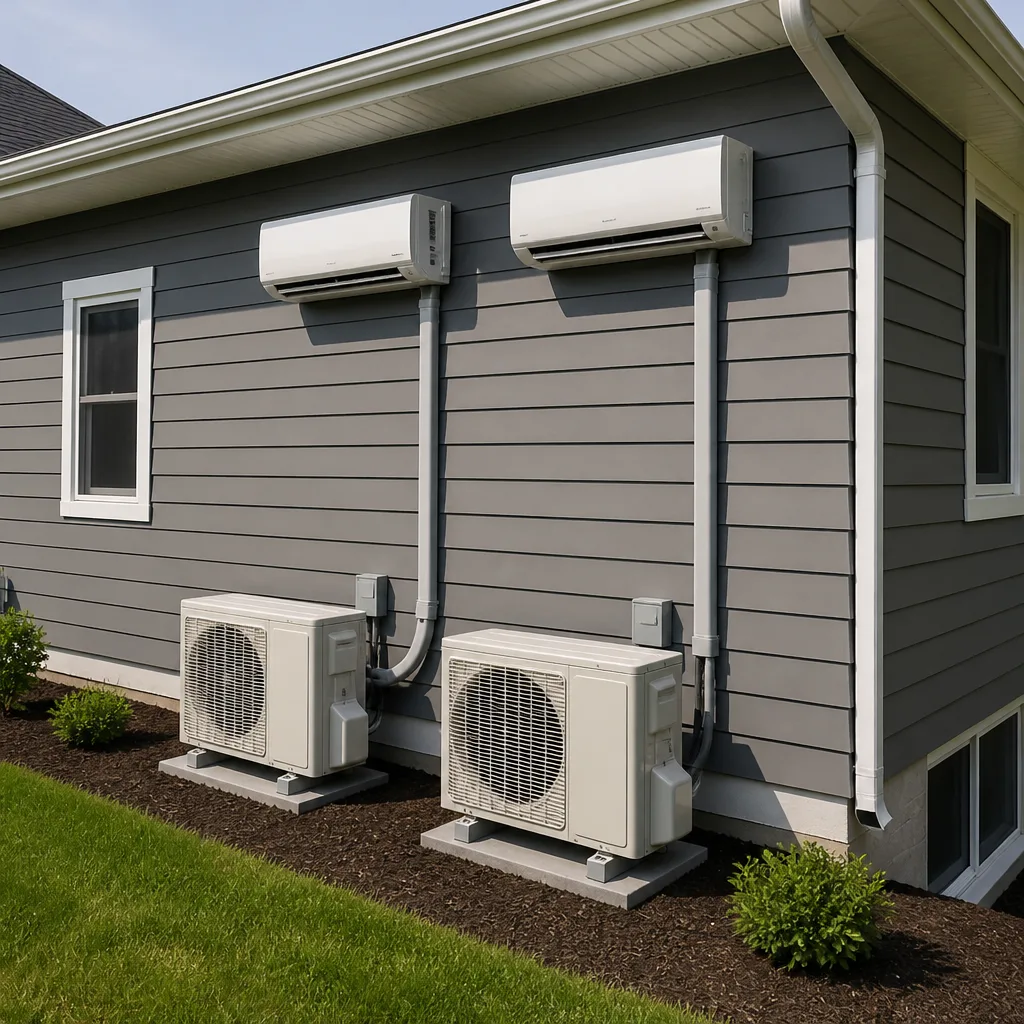 Ductless mini splits
 Carrier
 Trane
 Goodman
Seasonal tune-up and full diagnostic on your Carrier, Trane, or Goodman system - readings shown to you before any repair is proposed
Diagnosis first, numbers second - you approve the repair price before a single part goes in.
Get your free estimateThe Complete AC Repair Guide for Lewisville Homeowners
Most AC repair advice floating around the internet assumes a summer that tops out around 90 degrees. Lewisville doesn’t live there. When July stacks up triple-digit days one after another, your system isn’t just working harder; it’s working in a range the generic playbook never accounted for. That changes which parts wear out first, which repairs are urgent versus which can wait, and how your house itself affects the equipment sitting outside it. This guide covers all of it: the failure patterns that show up in Lewisville specifically, the repair-first approach, and how to read your system’s signals before a technician arrives.
Quick Answer
AC repair in Lewisville means diagnosing and fixing the specific failure points that North Texas heat and clay-heavy soil create, from refrigerant line stress caused by slab movement to compressor strain from months of long runtimes. The right approach is to repair the system you already own before considering replacement, and to triage safety and comfort failures in extreme heat ahead of issues that can safely wait for milder weather. When in doubt, get a straightforward diagnosis and honest options rather than a sales pitch.
Styles & brands we work with
- AC repair
- Furnace & heating
- Heat pumps
- Ductless mini splits
- Carrier
- Trane
- Goodman
Table of Contents
- Why AC Systems Fail Differently in Lewisville
- How Clay Soil and Slab Movement Stress Your System
- What the 1990s-2010s Building Boom Means for Repairs
- A Triage Framework for Extreme-Heat Failures
- Which Parts Fail Most Across the Major Brands
- Reading Your System Before the Technician Arrives
- Repair or Replace: Making the Call
- How to Choose an AC Repair Company in Lewisville
Why AC Systems Fail Differently in Lewisville
Lewisville summers regularly push past 100 degrees, and those days don’t arrive one at a time. They come in stretches. A system that might run a few hours a day in a milder climate here can run nearly continuously for weeks. That’s the core difference, and it drives everything downstream.
When an air conditioner runs long and hot, the compressor works harder, the condenser coil stays saturated with heat, and every mechanical component spends more time at its upper limit. Wear that a milder climate spreads across a decade gets compressed here. A part that might last a certain number of cooling seasons under lighter duty can reach its limit sooner when the system is asked to carry a full load, day after day, through the hottest stretch of the year.
There’s a second factor specific to Lewisville: the region’s clay-heavy soil. More on that in the next section, but the short version is that ground movement here works on the parts of your system that live in or under the slab, not just the parts in the attic. Generic guides that assume a basement or a crawlspace miss this entirely.
Humidity is part of the picture too. North Texas heat arrives with enough moisture that your system has to remove water from the air while it cools, which means longer runtimes to reach the thermostat setting and more condensate to manage. Drain lines that clog in a humid climate cause water damage and shutdowns that a dry-climate guide never mentions.
Put together, Lewisville systems deal with sustained load, ground movement, and humidity at once. Knowing that reshapes how you prioritize repairs and when to call us for AC repair.
How Clay Soil and Slab Movement Stress Your System
North Texas sits on expansive clay soil that swells when it’s wet and shrinks when it dries. Through a Lewisville year, that means the ground under and around a home is constantly shifting. For most of the house this stays invisible. For your AC system, it shows up in specific places.
The refrigerant lines and electrical conduit that run from the outdoor unit to the indoor coil often travel through or under the slab. When the soil moves, those lines are pulled and flexed. Over time that stress can lead to:
- Refrigerant line fittings that loosen and develop slow leaks.
- Conduit that cracks or separates, interrupting power to the outdoor unit.
- Vibration-related wear where lines pass through the foundation.
- Outdoor unit pads that tilt, throwing the compressor off level.
- Drain lines that shift and lose their slope, causing backups.
These are failure modes you won’t read about in a guide written for a mild, stable-soil climate, and they matter for diagnosis. If a Lewisville system loses refrigerant, the cause isn’t always a defective part; it can be a line that’s been worked by years of ground movement. A technician who knows the local soil behavior looks at line routing and foundation transitions, not just the coil.
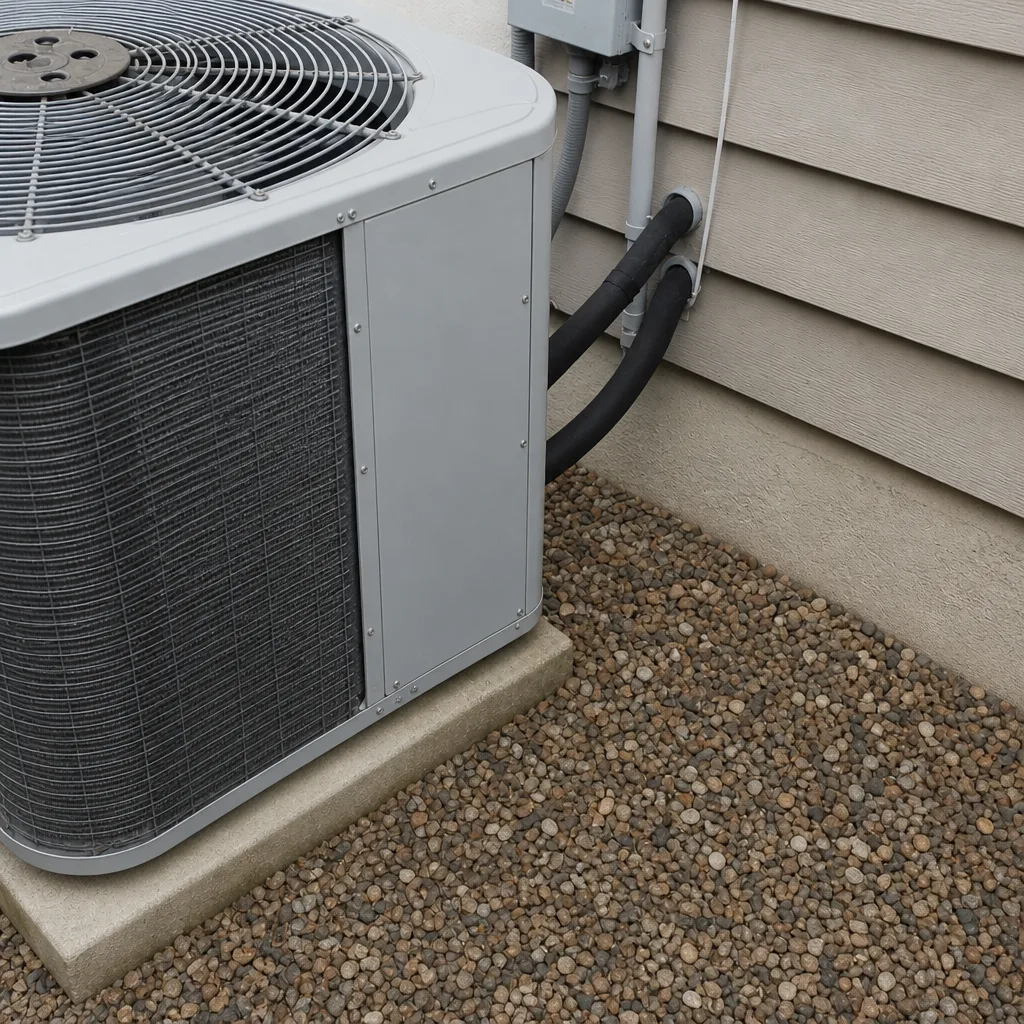
One practical note: an outdoor condenser pad that’s visibly tilted or sunk is worth flagging. A unit that isn’t level runs with more vibration and can wear bearings and mounts faster. Correcting the pad is part of getting the whole system healthy, not a cosmetic fix. If you notice this, mention it when you call so the technician plans for it.
What the 1990s-2010s Building Boom Means for Repairs
A large share of Lewisville homes went up during a construction boom spanning the 1990s through the 2010s. That matters right now because systems installed during that period are reaching predictable ages, and the parts that fail first follow recognizable patterns.
Systems from the earlier part of that range are, in many homes, already on a second or third round of components. Systems from the later part are entering the window where specific parts tend to give out. Some patterns worth understanding:
- Capacitors and contactors – the small electrical parts that start the compressor and fan – tend to be first to fail on systems now in their middle years. They’re inexpensive to replace and often the actual cause of a “system won’t start” call.
- Condenser fan motors wear out after years of long summer runtimes. A fan that’s slow to spin up or noisy is a common mid-life failure.
- Evaporator and condenser coils can develop leaks after years of thermal cycling and, in this region, ground-movement stress on the lines feeding them.
- Compressors are the big-ticket component. On a system that has otherwise held up, a failed compressor often forces the repair-versus-replace decision.
- Drain pans and lines in older homes may be cracked or clogged after years of condensate flow in a humid climate.
If your home was built in that window, the useful question isn’t “how old is the system” alone. It’s “which parts are due, and is fixing those parts still worth it?” That’s the repair-first conversation we have with Lewisville homeowners. You can read more about our approach on the Rutherford AC Repair page.
A Triage Framework for Extreme-Heat Failures
Not every AC problem is equally urgent, and in a Lewisville summer, triage matters. A homeowner facing 105 degrees needs to know which failures threaten health and safety now and which can be scheduled without risk. Here’s how we think about it.
Fix now (same-day priority):
- Complete loss of cooling during a heat wave, especially with vulnerable occupants in the home.
- Any electrical smell, burning odor, or scorched component near the air handler or outdoor unit.
- A compressor that trips the breaker repeatedly.
- Water actively overflowing from the drain pan or drain line.
- Ice on the refrigerant lines combined with warm air from the vents.
Can wait for milder weather (schedule it):
- Slightly reduced cooling on an otherwise functioning system with no other symptoms.
- A noisy outdoor fan that still runs and cools.
- A thermostat that reads a degree or two off but controls the system.
- Minor condensate drips that aren’t overflowing.
The logic: in extreme heat, a full cooling failure is a health risk, so it gets priority. A partially working system that still cools can often be scheduled once the worst heat breaks, which spreads cost and keeps you comfortable in the meantime. Anything involving electrical burning or repeated breaker trips is a safety issue and shouldn’t wait regardless of outdoor temperature, because those signals point to components that can fail dangerously. Our technicians have up to 15 years of experience reading these signals, and we treat a same-day cooling failure as the priority it is. We answer 24/7. Fast dispatch, 7am-7pm.
Which Parts Fail Most Across the Major Brands
We service nine of the most widely installed residential HVAC brands, including Lennox, Goodman, Rheem, and York, and the honest truth is that the most common failure points are shared across them. Brand affects parts availability and how a component is engineered, but the parts that wear out first are largely the same. Here’s a brand-agnostic breakdown of what we see fail most.
- Run and start capacitors. Across every brand, these are the most frequent single-cause failure. A bulging or failed capacitor stops the compressor or fan from starting, and the symptom looks like a dead system. Inexpensive to fix.
- Contactor. The switch that sends power to the outdoor unit. Pitted contacts cause intermittent starting or no cooling.
- Condenser fan motor. Long runtimes in Lewisville heat wear out bearings. A fan that’s slow, noisy, or stopped is a common call.
- Evaporator coil leaks. Present across brands; more likely on older systems and where line stress has developed.
- Drain line clogs. Not a brand issue at all; a humidity and maintenance issue that affects every system.
- Thermostat and low-voltage wiring faults. Common across brands, often traced to wiring connections rather than the thermostat itself.
When we look at a Goodman or a Lennox or a Rheem, we’re not guessing at an unfamiliar layout. Being factory-familiar with the brand you already have shortens diagnosis. Because we work on the brand in your home rather than steering you toward one manufacturer, the recommendation follows the part, not a sales target. If your system needs more than a repair can give it, that’s when we talk about AC installation. If a heating failure hits in winter, furnace repair is the other half of what we do.
Reading Your System Before the Technician Arrives
You can shorten a diagnosis and make the visit more productive by noting a few signals before the technician arrives. You’re not fixing anything; you’re giving the pro a head start. Here’s what to check and how to read it.
- Feel the air at the vents. Cold air means the system is cooling but possibly not enough. Warm air with the system running means a different problem entirely, often refrigerant or compressor related.
- Listen to the outdoor unit. A hum with no fan movement, a clicking that repeats, or a grinding noise each point in a different direction.
- Check for ice on the refrigerant lines. Ice on the lines with warm air inside is a warning sign worth reporting.
- Look at the drain pan and line. Standing water or overflow tells the technician the condensate system needs attention.
- Note the thermostat behavior. Does it call for cooling and nothing happens, or does the system run and never reach the setpoint?
- Check the breaker. A tripped breaker that resets and holds is different from one that trips again immediately. Report which it was.
Write these down and mention them when you call. That context, plus a technician familiar with Lewisville’s soil and heat patterns, often shortens the diagnostic visit. For safety: if you smell burning or see scorched wiring, turn the system off at the thermostat and don’t reset breakers yourself. Electrical faults are dangerous and need a trained professional. Call (844) 761-3596. We answer 24/7. Fast dispatch from 7am to 7pm.
Repair or Replace: Making the Call
The repair-or-replace question comes down to a few practical signals, and in most cases, a repair is the first thing worth trying. Here’s the framework we use.
Repair makes sense when:
- The failure is a single component (capacitor, contactor, fan motor, drain issue).
- The rest of the system is holding up and cooling.
- The cost of the repair is modest relative to the system’s remaining life.
- You want to keep the brand you have and avoid the cost and lead time of a new unit.
Replacement deserves a conversation when:
- A compressor has failed on a system already near the end of its life.
- Multiple major components are failing at once.
- Repairs are stacking up faster than the system keeps you cool.
- You’re facing a repeat of the same expensive repair.
The key is honesty. We lead with repair because that’s usually the right answer, and a straightforward diagnosis with a written estimate gives you a clear picture. If replacement is genuinely the better path, we’ll say so and explain why. That’s how a repair-first shop should talk to you. New systems are load-calculated and scheduled, so installation is planned rather than rushed, and you’ll get a fixed written price and a set install date.
How to Choose an AC Repair Company in Lewisville
Choosing the right company matters more than any single repair. A few things to look for when you’re evaluating options in Lewisville:
- Repair-first orientation. Does the company default to fixing what you have, or steer toward replacement? Ask directly.
- Brand familiarity. Ask whether they service the brand in your home. Familiarity shortens diagnosis and avoids guesswork.
- Focused services. A company that does AC repair, AC installation, and furnace repair and little else stays sharp on those trades.
- Straightforward diagnosis. You want a clear explanation of what failed and why, with honest options.
- Written estimate. The price should be set in writing before work begins, with no surprise add-ons.
A company that covers both cooling and heating means one contact across seasons, so you’re not juggling vendors when winter comes. If you’re searching for Lewisville HVAC service, ask these questions before you book. Our technicians have up to 15 years of experience, and we serve nine of the most widely installed brands because we want to fix the system you already own.
Common Mistakes to Avoid
- Assuming a dead system means replacement. In our experience, the most common “dead system” cause is a cheap capacitor or contactor, not a failed compressor. Diagnose before you decide.
- Ignoring a tilted outdoor unit. A condenser pad that’s sunk or leaning is a real Lewisville ground-movement symptom; skipping it accelerates wear on the compressor and mounts.
- Resetting a breaker repeatedly. If the breaker trips again after a reset, stop. A repeat trip points to an electrical fault that needs a professional, not another reset.
- Putting off a full cooling failure in extreme heat. In a Lewisville heat wave, a system with no cooling is a health risk and belongs at the top of the priority list.
- Skipping the pre-call observations. A few notes on airflow, noise, and thermostat behavior shorten diagnosis and make the visit more useful.
- Letting a drain line go unchecked. In this humidity, a clogged line causes overflow and water damage that a quick inspection would have caught.
- Choosing a company that only sells replacement. If every call ends in a pitch for a new unit, you’re not getting a repair-first diagnosis.
See the difference
 Before
 After
 Before
 After
 Before
 After
When to Call a Professional
Call a professional when cooling fails completely during a heat wave, when you smell burning or see scorched components, when the breaker trips repeatedly, or when water is overflowing from the drain system. Those are safety and comfort issues that shouldn’t wait. Also call when you’ve got reduced cooling with ice on the lines, a noisy outdoor unit that’s still running, or a system that never reaches the setpoint. A diagnosed repair now usually costs less than a failure later, and it keeps your Lewisville home comfortable through the worst of the summer. Rutherford AC Repair offers free estimates in Lewisville. Call (844) 761-3596. We answer 24/7. Fast dispatch from 7am to 7pm, Sunday through Friday.
Frequently Asked Questions
AC repair cost varies by the part and the diagnosis, so we set the price per job with a free written estimate rather than quoting a flat number. The written estimate sets the final price before any work starts. Small parts like capacitors cost far less than a compressor or coil, and the estimate tells you exactly which is involved. Call (844) 761-3596 for an exact quote; estimates are free.
Same-day AC repair is often possible for cooling failures, and we treat a full loss of cooling in extreme heat as a priority. We answer 24/7, and dispatch runs from 7am to 7pm, Sunday through Friday; we’re closed Saturday. Call (844) 761-3596 and we’ll get you booked into the nearest opening.
We work on the brand you already have across nine of the most widely installed residential brands, including Carrier, Trane, Lennox, Goodman, Rheem, York, Daikin, Bryant, and American Standard. That covers most systems found in Lewisville homes. Call (844) 761-3596 to confirm coverage for your system.
Repair is usually the right first step when a single component has failed, and replacement becomes the better conversation when a compressor fails on an aging system or repairs stack up. A straightforward diagnosis gives you the honest answer. Call (844) 761-3596 for a free estimate and clear options.
Refrigerant line fittings can loosen from the ground movement that expansive clay soil causes around North Texas homes, so a slow leak isn’t always a defective part. A technician familiar with the local soil behavior checks line routing and foundation transitions, not just the coil. Call (844) 761-3596 to schedule a diagnosis.
No. The price is set per job by the written estimate, and an estimate is free. Call (844) 761-3596 for your quote.
The Bottom Line
AC repair in Lewisville is shaped by conditions most guides ignore: sustained triple-digit heat, clay soil that stresses lines and conduit, and a housing stock from the 1990s-2010s boom whose systems are hitting predictable part failures now. Triage full cooling failures in extreme heat as priority, schedule lesser issues for milder weather, and treat any electrical burning or repeated breaker trip as a safety call. Repair the brand you already own before considering replacement, and choose a company with a repair-first orientation and a written estimate. Our technicians have up to 15 years of experience, and we cover heating and cooling year-round. Call (844) 761-3596 for a free estimate. We answer 24/7. Fast dispatch from 7am to 7pm, Sunday through Friday.
Written by the team at Rutherford AC Repair.