
Last updated November 15, 2026
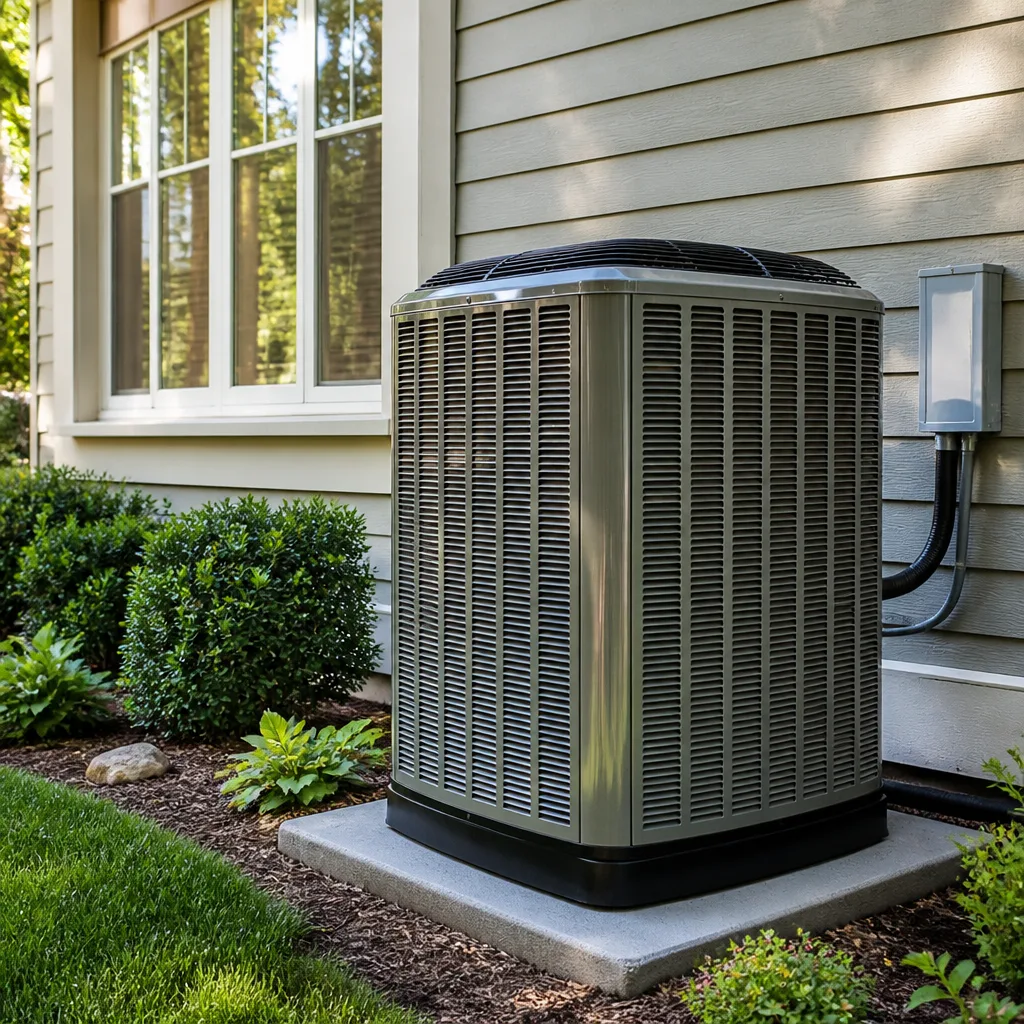 AC repair
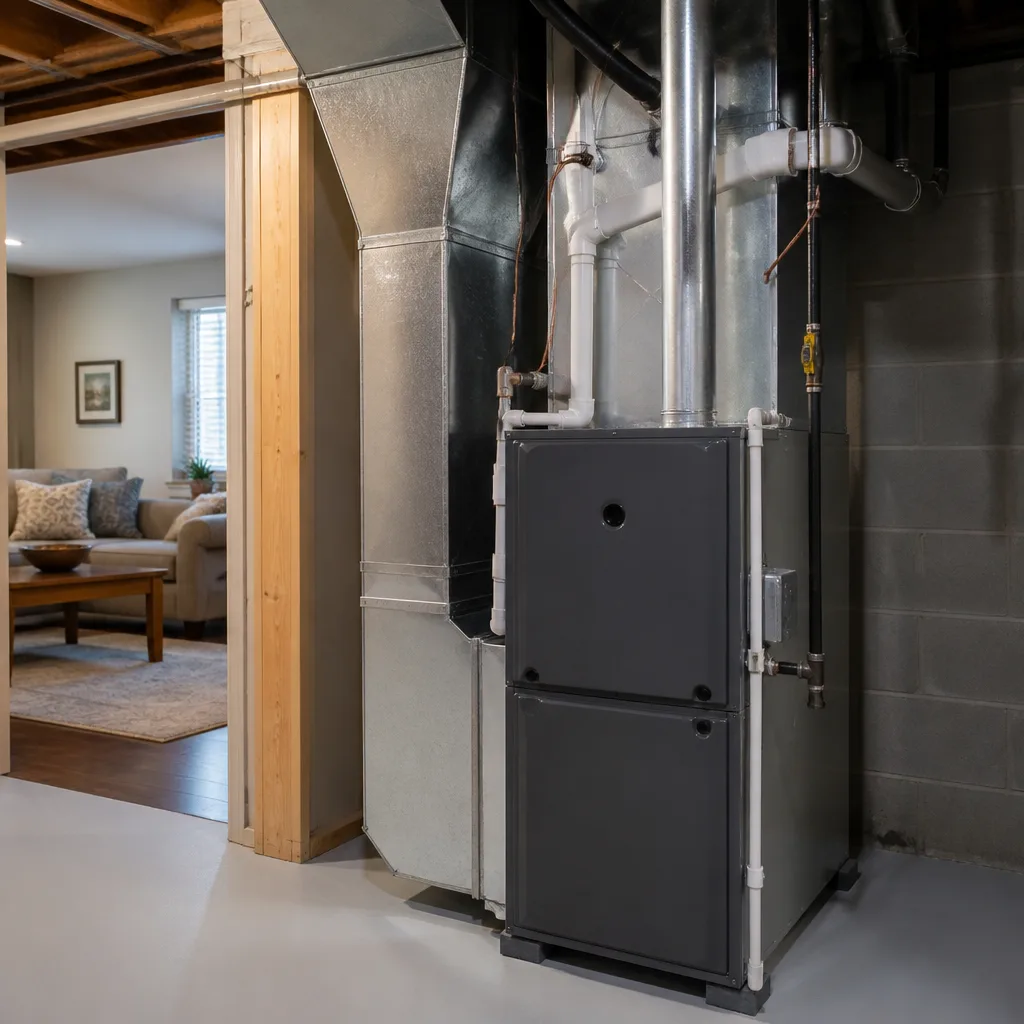 Furnace & heating
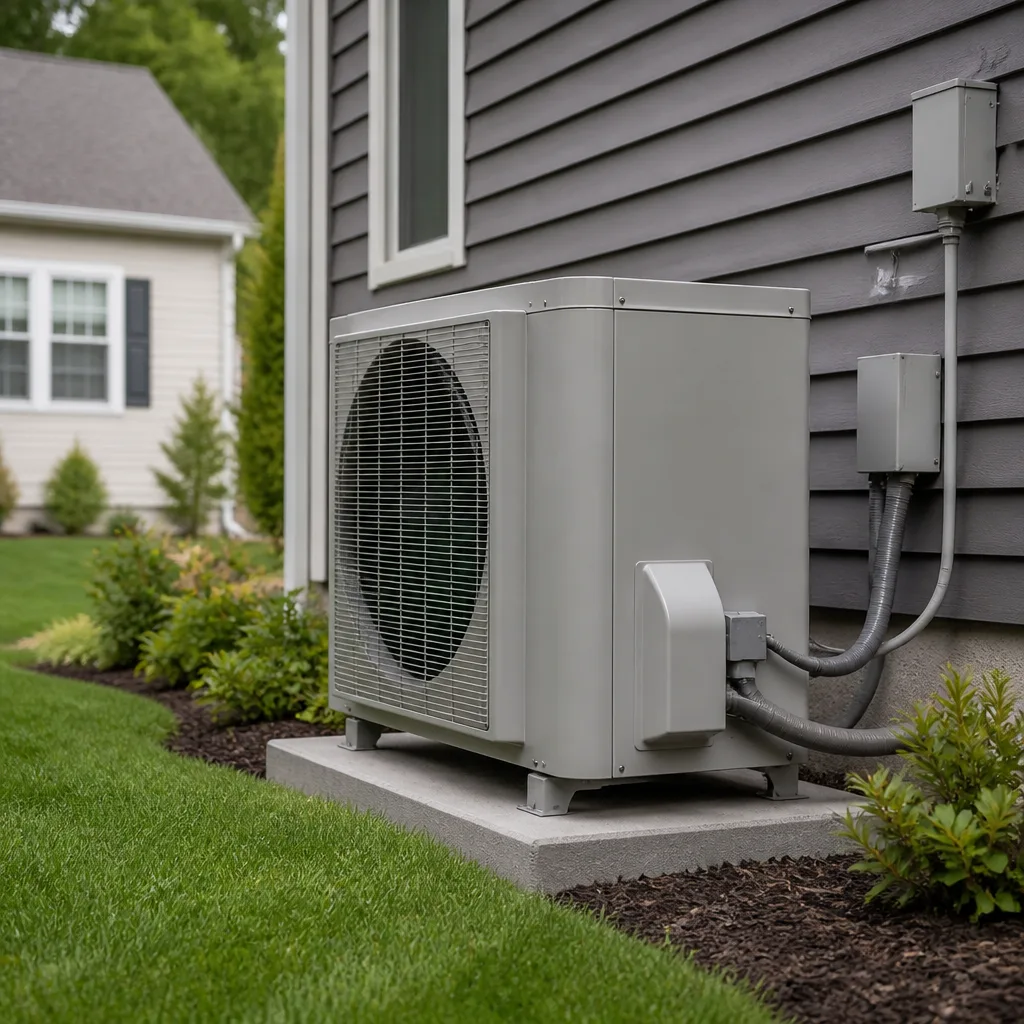 Heat pumps
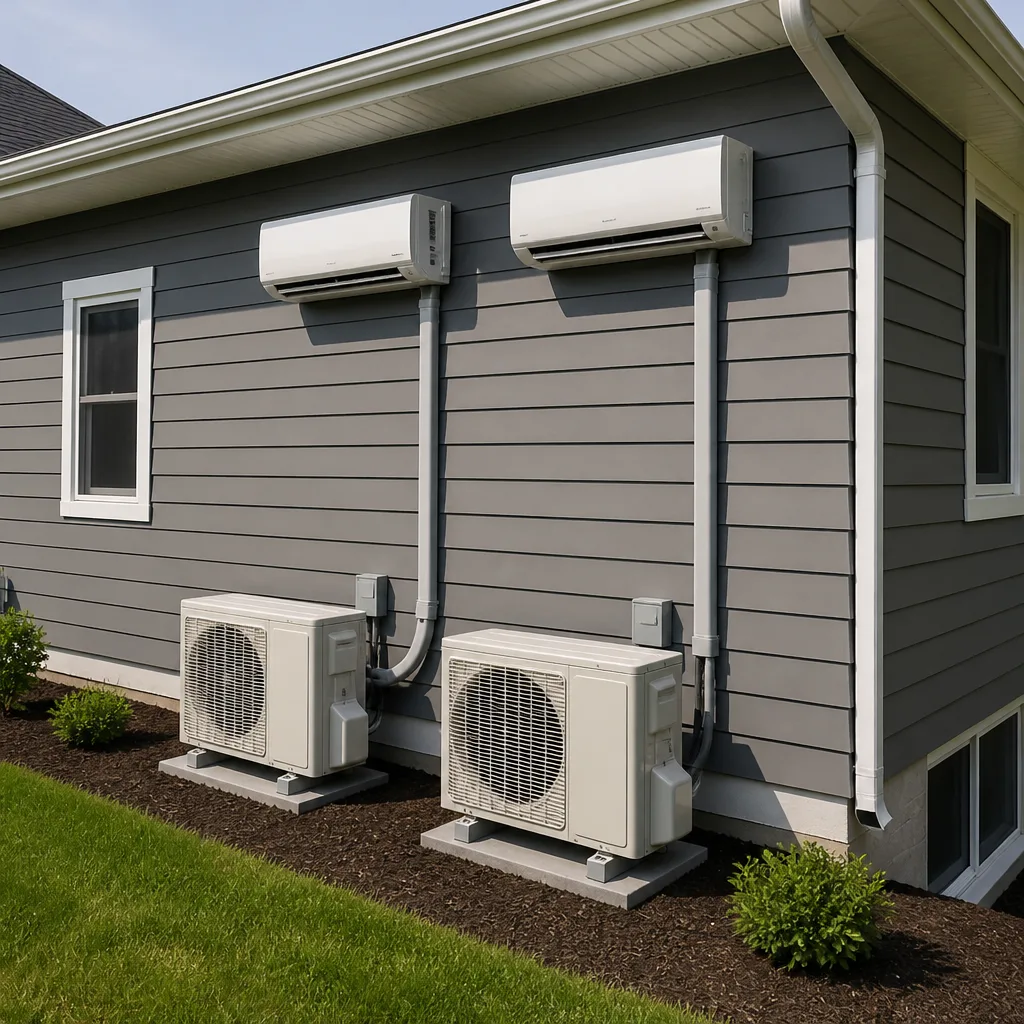 Ductless mini splits
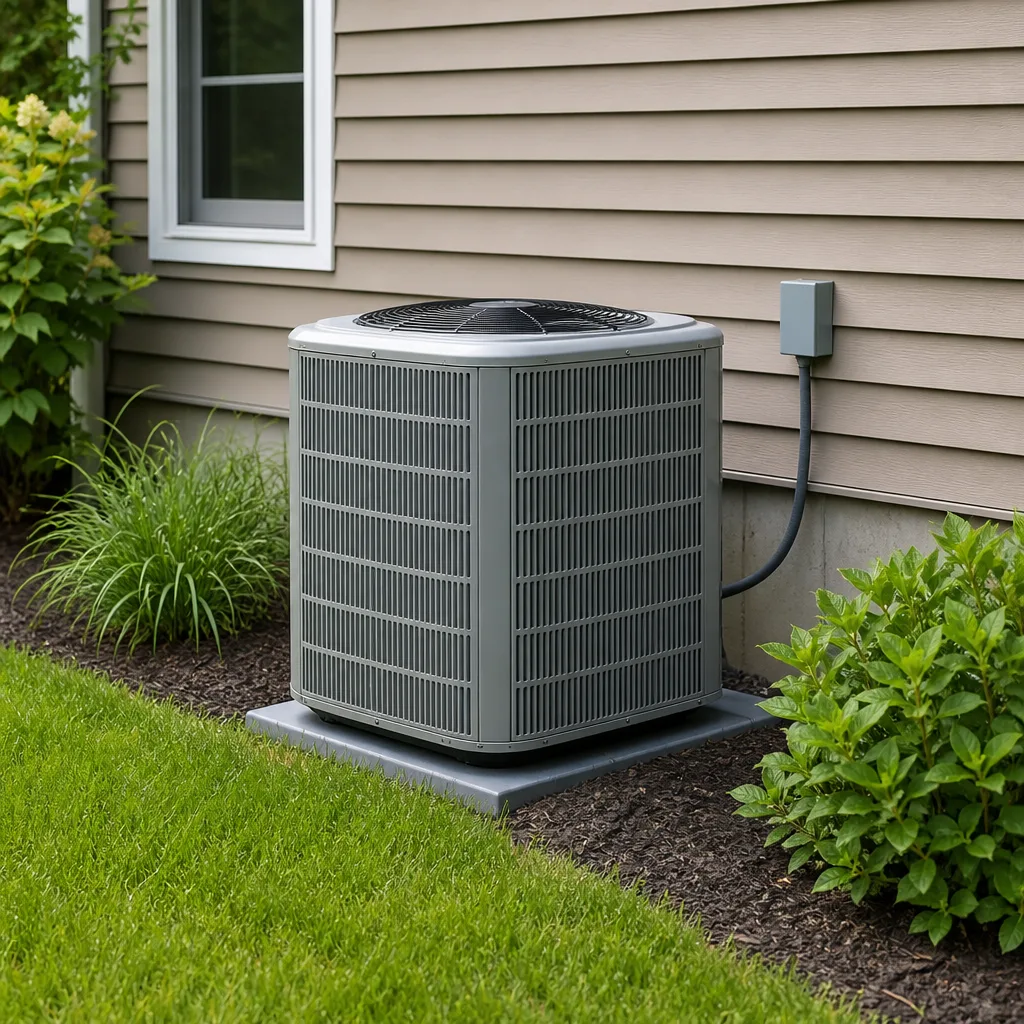 Carrier
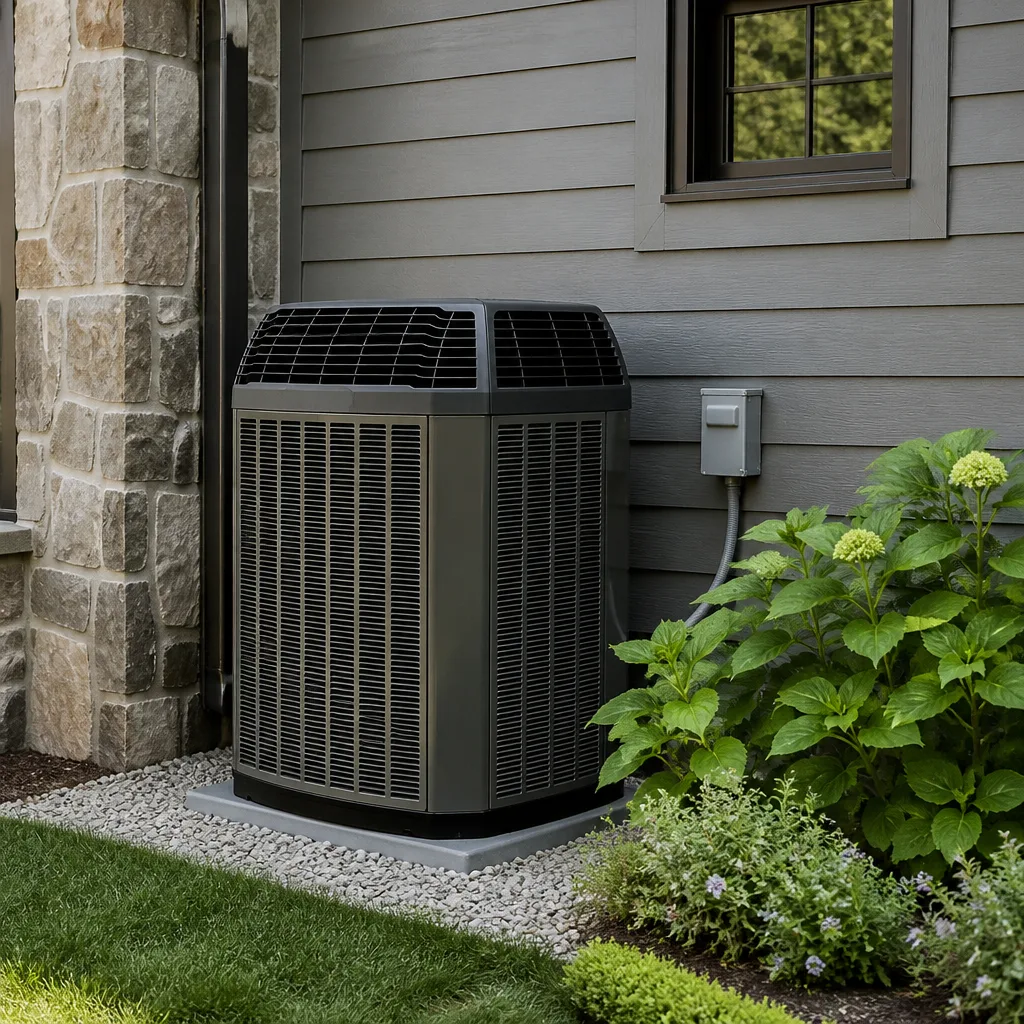 Trane
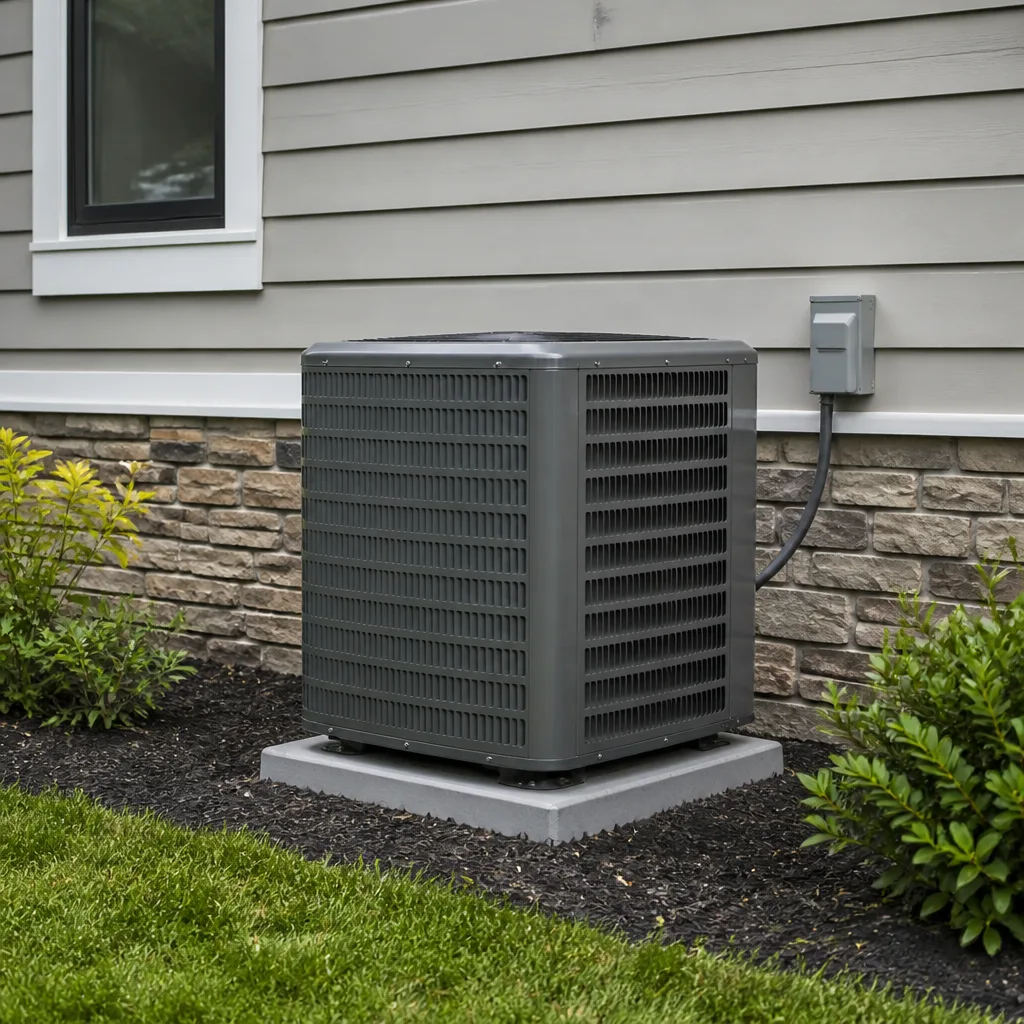 Goodman
Seasonal tune-up and full diagnostic on your Carrier, Trane, or Goodman system - readings shown to you before any repair is proposed
Diagnosis first, numbers second - you approve the repair price before a single part goes in.
Get your free estimateChoosing the Right HVAC Brand: A Buyer’s Guide for Lewisville
The brand on the cabinet means almost nothing if the contractor installing it is the only one in a 30-mile radius authorized to service it, which turns every future repair into a single-vendor negotiation. Most homeowners in Lewisville shop HVAC brands the way they shop cars: by reputation, by marketing, by whatever the installing company happens to sell. That’s the wrong lens. The better question is whether the brand you’re buying can be serviced by a competent technician with standard tooling and parts that are actually available through DFW-area wholesale distributors. This guide covers how to evaluate brands that way, which ones use proprietary controls, what warranties really protect you, and how to spot a brand pitch driven by an installer’s rebate rather than your long-term cost.
Quick Answer
For most Lewisville homeowners, the “best” HVAC brand is a widely installed one with standard components and parts available locally, installed by a contractor who did a proper Manual J load calculation for your specific house. Carrier, Trane, Lennox, Goodman, Rheem, York, Daikin, Bryant, and American Standard all have real service networks in the DFW market, and a qualified technician can work on any of them. Brand matters far less than sizing, installation quality, and whether technicians in your area can get parts without a dealer-only phone call.
Styles & brands we work with
- AC repair
- Furnace & heating
- Heat pumps
- Ductless mini splits
- Carrier
- Trane
- Goodman
Table of Contents
- Why HVAC Brand Matters Less Than You Think
- How to Check Parts Availability in the Lewisville Area
- Proprietary Controls vs. Standard Components
- Brand Warranty vs. Workmanship Warranty
- SEER2 Ratings vs. Proper Sizing
- How to Avoid Being Steered Toward a Brand
- What Lewisville’s Climate Demands From Your System
- A Step-by-Step Brand Evaluation Checklist
Why HVAC Brand Matters Less Than You Think
Here’s the uncomfortable truth about HVAC brands: the major manufacturers source compressors, blower motors, contactors, capacitors, and control boards from a small pool of shared component suppliers. Two different brand names can sit on equipment with nearly identical internals. What actually differs is the cabinet, the marketing, the dealer program, and occasionally the control protocol. That’s not nothing, but it’s not the deciding factor most homeowners think it is.
What matters more in Lewisville is the contractor standing in your mechanical closet. A well-installed Goodman system sized correctly for a two-story home near Old Town will outperform a badly installed premium-brand unit every single summer, because the failure points in DFW are almost always installation-related: undersized return ducts, wrong refrigerant charge, poor airflow through a hot attic. Those problems don’t care what logo is on the door.
We lead with repair because that reflects how the equipment actually fails. When a system can be fixed, the smart money goes to fixing it and keeping the rest of the system running. Brand shopping is a replacement decision, and replacement decisions should be made on the merits of the house, not the merits of a brochure.
In our experience across Lewisville, the brands we see in the field most often are the same nine the market has broadly adopted: Carrier, Trane, Lennox, Goodman, Rheem, York, Daikin, Bryant, and American Standard. We’re factory-familiar with all nine. That’s the practical baseline any contractor should meet before selling you a system, because a technician who has never opened your brand is learning on your dime.
- What drives repairs: capacitors, contactors, blower motors, refrigerant leaks, clogged drains. All shared across brands.
- What drives comfort: sizing, duct design, refrigerant charge, airflow. All contractor-controlled.
- What drives parts hassle: proprietary controls, dealer-only components, unusual communication protocols.
- What drives long-term cost: availability of parts near Lewisville and whether any competent technician can service the unit.
How to Check Parts Availability in the Lewisville Area
The best way to judge an HVAC brand is to ask a technician who doesn’t sell it: can you get parts for it this week? In the Lewisville and greater DFW market, that question has a real answer because wholesale distributors serving the metroplex stock most standard components for the nine major residential brands. The gap between brands isn’t usually catastrophic, but it’s real and it shows up in days, not months, when a part is scarce.
Here’s how to evaluate parts availability yourself without industry access:
- Ask for the distributor’s name. When a contractor quotes a brand, ask which wholesale distributors in the DFW area carry it. A confident, specific answer is a good sign. A vague one is not.
- Ask how long a typical non-stock part takes. Standard components like capacitors and contactors should be same-day or next-day through local distribution. Any part taking more than a few days is a signal.
- Check whether the equipment uses a variable-speed inverter or communicating control. Those tend to be the parts that aren’t sitting on a shelf in Lewisville.
- Ask about the outdoor unit’s compressor. Compressors for common brands are generally available locally; less-common models may be a multi-day order. That difference matters in July.
- Ask what happens if the system fails in a heat wave. A contractor who can source parts quickly is one who knows the local supply chain, not just the brand catalog.
That last point is where brand selection meets lived experience in Lewisville. Summers routinely push equipment hard, and a system that can’t get a part for a week is a system that sits idle. When you’re choosing between two brands that both meet your efficiency and budget needs, the one with broader local distributor support is the safer purchase.
Proprietary Controls vs. Standard Components
This is the single most overlooked question in HVAC brand selection, and it’s the one that determines whether you’re locked in for the life of the system. Some brands use proprietary communicating controls and thermostats, which means the indoor unit and outdoor unit share a manufacturer-specific protocol and often require that manufacturer’s thermostat to operate all features. Others use standard 24-volt controls and industry-standard components, which means almost any qualified technician can service and even upgrade parts of the system.
Neither approach is inherently bad. Proprietary systems can offer tighter staging, better diagnostics, and smoother integration with smart home features, but you pay for that in service flexibility. If your area has one authorized dealer for that brand, every repair becomes a negotiation with that dealer. In a market like Lewisville with broad contractor coverage that’s less of a problem than it would be in a rural area, but it’s still a factor.
Standard-control systems are the easier long-term bet for most homeowners:
- Any competent technician can diagnose and repair them without brand-specific software.
- Parts are usually cross-compatible with other manufacturers using the same components.
- Thermostat selection is open, so you’re not tied to a specific brand’s smart thermostat.
- Replacement of individual components is straightforward, which supports repair-first decisions.
If you’re drawn to a premium system with proprietary controls, that’s a legitimate choice, but go in with eyes open. Ask the contractor directly: “If you’re not available in five years, who else in Lewisville can service this system?” If the answer is unclear, that’s a real risk to consider before signing.
Brand Warranty vs. Workmanship Warranty
Most homeowners focus on the brand’s equipment warranty and completely overlook the warranty that actually protects them when something goes wrong: the installer’s workmanship warranty. These are entirely different things, and confusing them is one of the most common costly mistakes in HVAC purchases.
The equipment warranty covers the manufacturer’s components against defects. It typically excludes labor, and coverage often varies by which components fail and how the system was installed. If a compressor fails under warranty, the manufacturer replaces the compressor, but the labor to diagnose and install it may fall on you or on your contractor’s labor policy.
The workmanship warranty covers how the system was installed and commissioned. That’s almost everything that goes wrong in the first few years: refrigerant leaks at braze joints, incorrect charge, ductwork modifications that came apart, a thermostat wired wrong. A workmanship warranty is a promise about the installer’s own hands, and it’s the warranty you’ll actually use.
- Read both documents. Ask for the equipment warranty terms and the workmanship warranty terms in writing before you sign.
- Check what labor is covered. Many equipment warranties don’t cover labor at all; some do. Get it in writing.
- Ask what the workmanship warranty covers. A good one covers installation-related failures, not just “we’ll come back and look.”
- Check whether the warranty requires annual maintenance. Some do, and skipping it can void coverage.
- Ask whether the warranty transfers to a new owner. This matters if you might sell your Lewisville home.
In our experience, a mid-tier brand installed by a meticulous contractor with a strong workmanship warranty outperforms a premium brand installed hastily with none. Choose the installer as carefully as the brand, and get both warranties in writing before the work begins.
SEER2 Ratings vs. Proper Sizing
SEER2 is the current efficiency rating standard for HVAC equipment, and manufacturers market it heavily. A higher SEER2 number means the equipment is more efficient under standardized test conditions, which is genuinely useful information. But SEER2 comparisons between brands say less about your actual comfort and electricity use than the load calculation that determines what size equipment your home actually needs.
Proper sizing means a Manual J load calculation specific to your house: square footage, window orientation, insulation, duct design, air infiltration, and ceiling height all feed into it. A house in Lewisville with a west-facing wall of glass in the afternoon sun has a very different cooling load than a shaded house of the same square footage. Sizing by rule of thumb (roughly one ton per 600 square feet) is how homes end up with oversized systems that short-cycle, run dehumidification poorly, and wear out faster. Undersized systems can’t keep up in August.
What that means for brand shopping:
- A high-SEER2 system installed at the wrong tonnage underperforms a properly sized mid-efficiency system every summer.
- SEER2 ratings are calculated under standardized conditions; your home is not standardized, and a proper Manual J tells you what the equipment will actually need to do.
- Oversized systems cost more up front and more in repairs, because short cycling stresses the compressor and blower.
- Duct modification is often part of proper sizing. A new unit feeding undersized returns will never deliver its rated efficiency.
Before you compare brands on SEER2, ask the contractor for the Manual J calculation for your home. A contractor who can produce one, or who walks through the sizing logic on site, is one who is thinking about your actual comfort. A contractor who sizes by eyeball is selling equipment, not solutions.
How to Avoid Being Steered Toward a Brand
The HVAC industry runs on manufacturer incentive programs. Contractors who hit volume targets with a given brand get rebates, spiffs, or sales bonuses that can run into real money. That’s not evil, and many excellent contractors participate and still do honest work. But it does mean that when a contractor pushes one brand hard and dismisses another, the recommendation isn’t always neutral.
You can protect yourself without being cynical. A few practical checks:
- Ask why that brand. “Because it’s the best” is not an answer. A good contractor explains specific reasons: parts availability, dealer support, a service network, a component you specifically wanted.
- Ask what the alternative would be. A contractor who recommends one brand but can articulate why another would also work is showing you their reasoning, not just their sales target.
- Ask whether they’re a factory-authorized dealer with a volume commitment. That’s not disqualifying, but it’s information you’re entitled to.
- Compare quotes on paper. When you get two or three bids, compare equipment specs, sizing, warranty terms, and included scope line by line. Don’t accept “equivalent” as a comparison.
- Verify the workmanship warranty and labor terms. A brand-driven pitch often glosses over labor coverage; a homeowner-driven pitch usually leads with it.
We aren’t a single-brand dealer, which is exactly why we can help here. We service all nine major residential brands, so we don’t have a reason to push one over another. If you already own a brand and want an honest view on repairing it, that’s the conversation we want to have. That’s the whole point of a repair-first shop.
What Lewisville’s Climate Demands From Your System
Lewisville sits in a part of North Texas with long cooling seasons and mild winters, which shapes which equipment features matter most. Systems here spend far more of their working life in cooling mode than heating mode, so the priorities tilt toward the cooling side: quality of install, proper refrigerant charge, duct performance, and the availability of AC parts when a component fails in July.
That doesn’t mean heating is an afterthought. Furnace repair is a real need in this market too, and having a single contractor cover both seasons is practical if you don’t want to juggle separate vendors when the temperature swings. But if you’re choosing brand priorities, weight the cooling side more heavily: which brand’s compressor and air handler components are well-supported locally, and which brand’s parts can a technician get quickly during the peak season.
For homeowners comparing brands within Lewisville, a few specifics matter:
- Peak-season parts availability: in July and August, the difference between a part in stock at a DFW distributor and one that’s back-ordered can be days of discomfort.
- Duct performance: much of the older housing stock has ductwork sized for 1980s equipment; a modern high-efficiency system sized correctly may need duct upgrades to perform.
- Attic equipment: a significant share of Lewisville homes have attic-mounted air handlers, which stresses the equipment differently and makes installation quality especially important.
- Single-vendor coverage: having one contractor you trust for both cooling and furnace work, instead of splitting the relationship, usually means faster diagnosis and fewer handoffs.
If you want a broader look at service in the area, our Lewisville page covers what we do locally. What we won’t do is push you into a brand that isn’t a fit for your house. Straight talk and honest options is the whole approach.
A Step-by-Step Brand Evaluation Checklist
Here’s the practical sequence we’d recommend to any homeowner making this decision, whether you’re in Lewisville or anywhere else in the DFW area. It works whether you’re choosing a brand for a new system or evaluating whether to repair the one you’ve got.
- Get a Manual J load calculation. Not a rule-of-thumb sizing. Ask for the actual calculation for your home. This determines tonnage and airflow more than the brand does.
- Identify the brands your technician already knows. Ask which brands the contractor works on regularly and whether they’re factory-familiar with the nine common ones. If they only service one brand, that’s a locked-in relationship.
- Check whether your candidate brand uses proprietary controls. Ask directly: “If you’re not available, who else in Lewisville can service this?” Standard 24-volt systems are less risky; proprietary ones concentrate your options.
- Ask about local parts availability. Which distributors in the DFW area stock this brand’s standard components? How fast do non-stock parts arrive?
- Compare SEER2 within your sizing, not across brands. Once you know the right tonnage, compare efficiency across the brands that will be installed at that size. The efficiency number follows the correct size; it doesn’t replace it.
- Get both warranties in writing. Equipment warranty and workmanship warranty, with labor terms, exclusions, and any maintenance requirements spelled out.
- Compare at least two written quotes line by line. Equipment, sizing, duct work, warranty, and labor terms should all be listed. Apples-to-apples comparison prevents the sales pitch from becoming the deciding factor.
That checklist filters out most of the brand-driven pressure. The brands that survive it are ones you can actually live with, and the contractor who walks through it with you is one you can call on when something fails.
Common Mistakes to Avoid
- Assuming brand reputation equals local serviceability. A prestigious national brand with a single dealer in Lewisville is a harder-to-service system than a widely installed one with parts on every DFW wholesale shelf.
- Skipping the Manual J. Over-reliance on rule-of-thumb sizing is the most common cause of the short-cycling, uneven comfort, and compressor fatigue homeowners blame on “a bad brand.”
- Confusing the equipment warranty with the workmanship warranty. The manufacturer’s warranty protects the parts; the workmanship warranty is what protects you from installation errors, and it’s the one you’ll actually use in the first few years.
- Letting a rebate program choose your brand. If the installer’s manufacturer spiff is steering the conversation, ask what the alternative would be and why. The homeowner’s long-term service cost should drive the decision.
- Chasing SEER2 across brands when the sizing is wrong. A higher number on a poorly sized unit delivers less comfort and less savings than a correctly sized lower-SEER2 system.
- Choosing equipment with proprietary controls without checking who else can service it. If the dealer who installs it isn’t around in five years, you’ll want other options. Ask the question before the install, not after.
- Replacing a repairable system because a brand pitch said so. If your existing system is a common brand with available parts, get a repair diagnosis before accepting a replacement quote. The repair-first instinct is worth having on your side of the table.
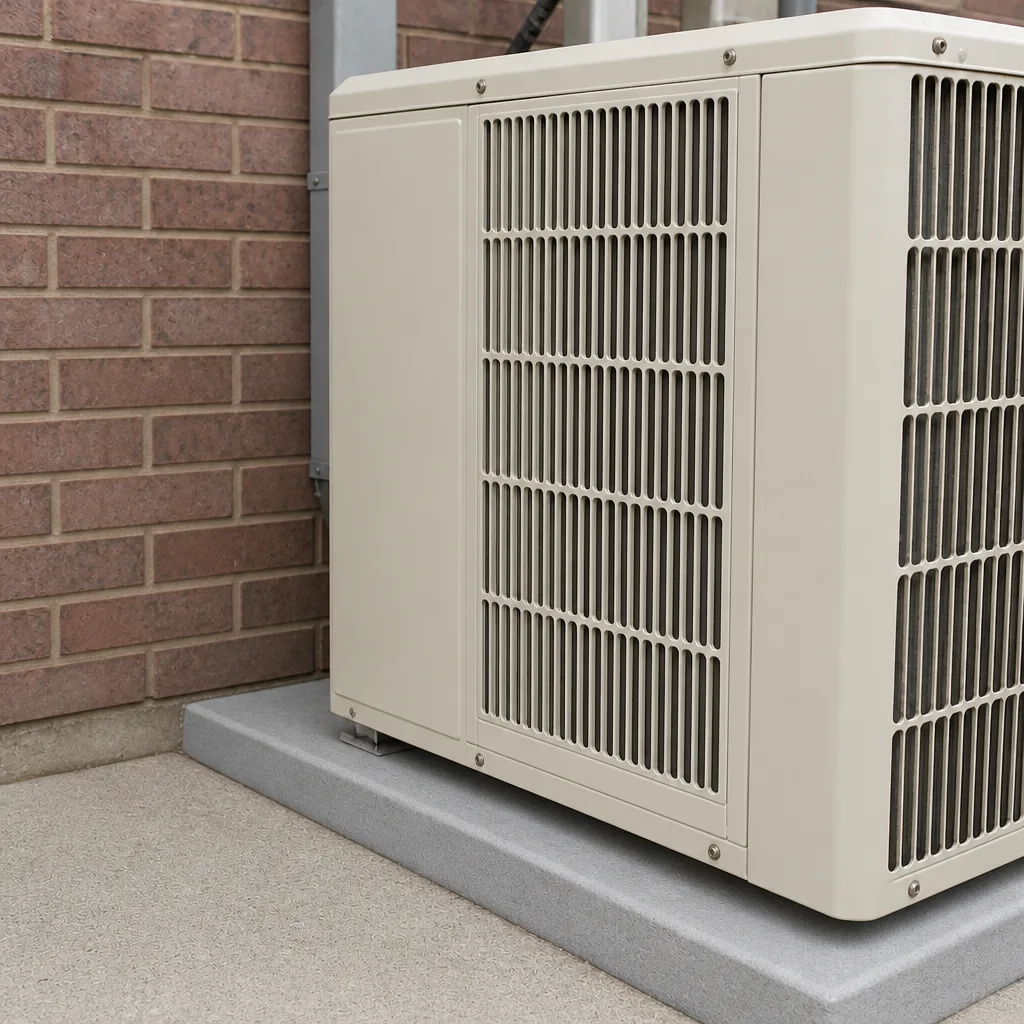
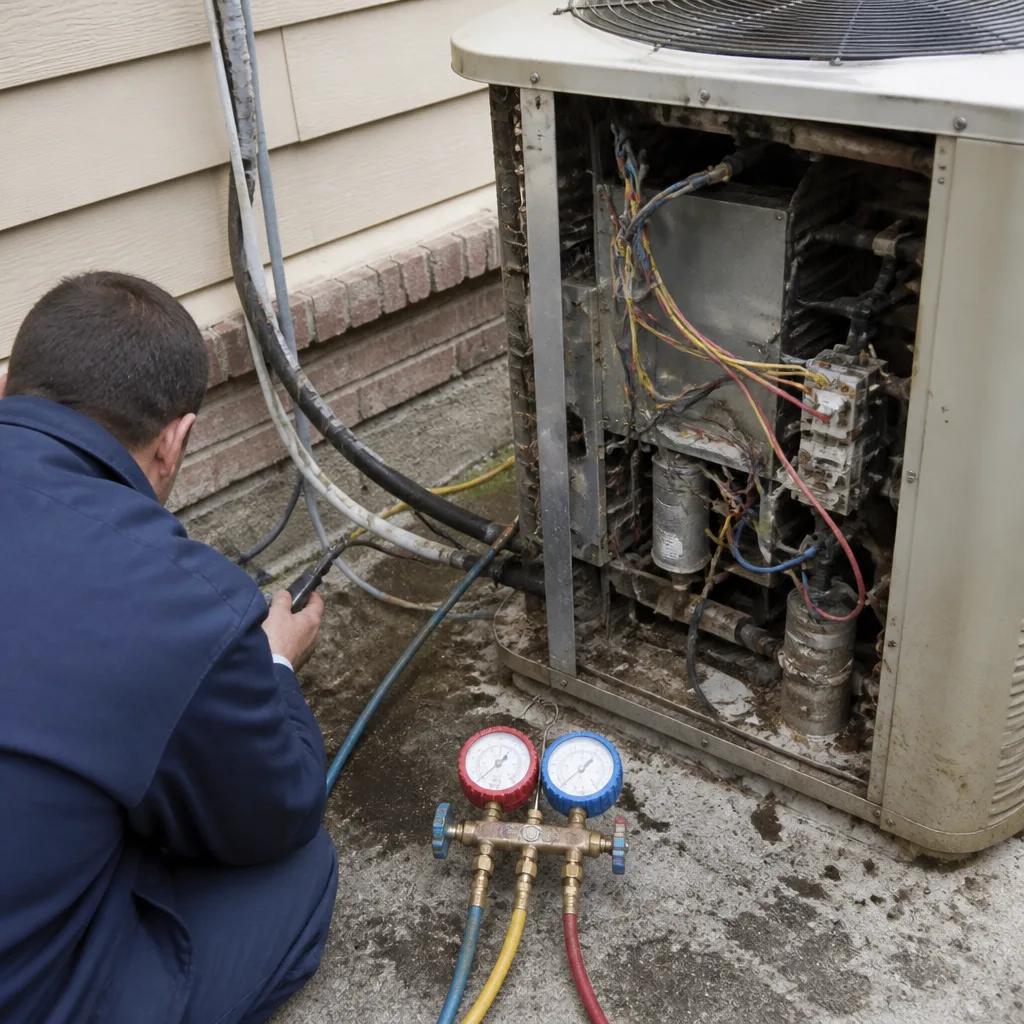
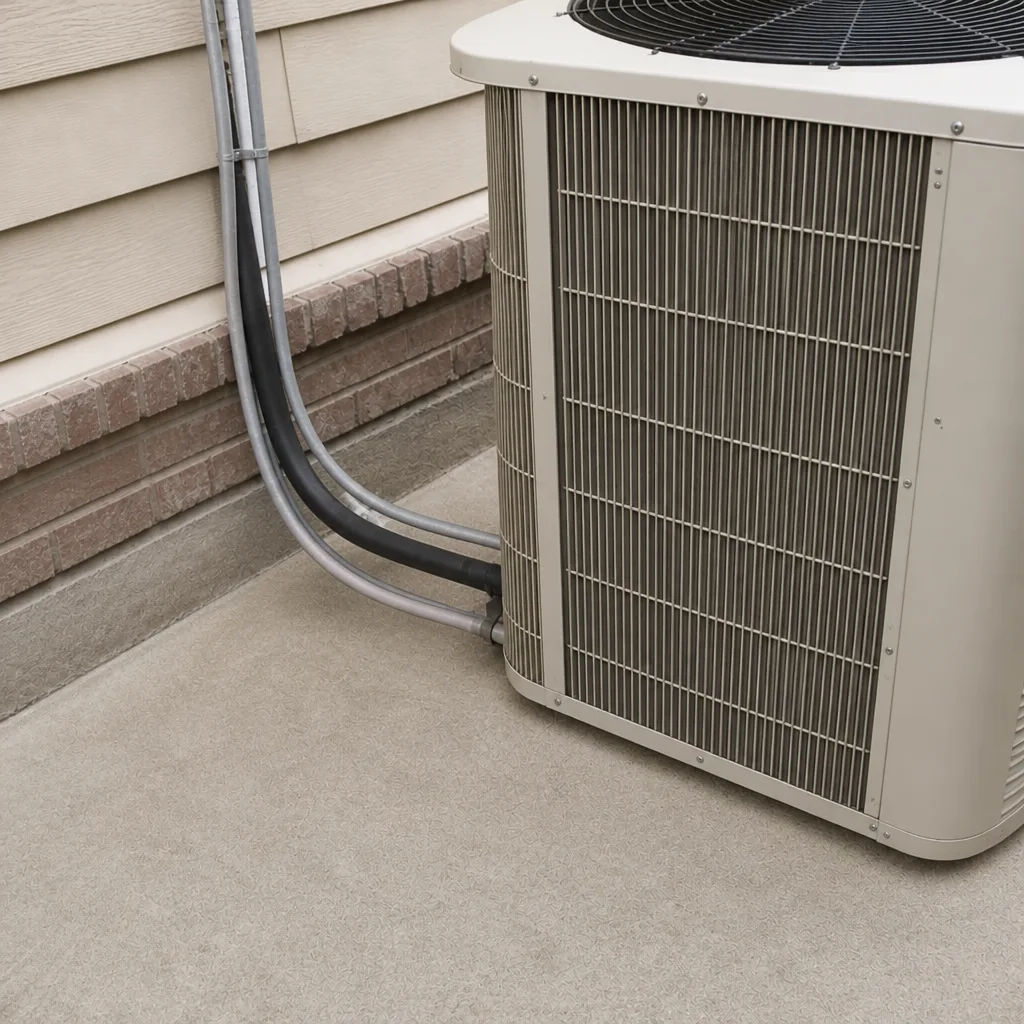
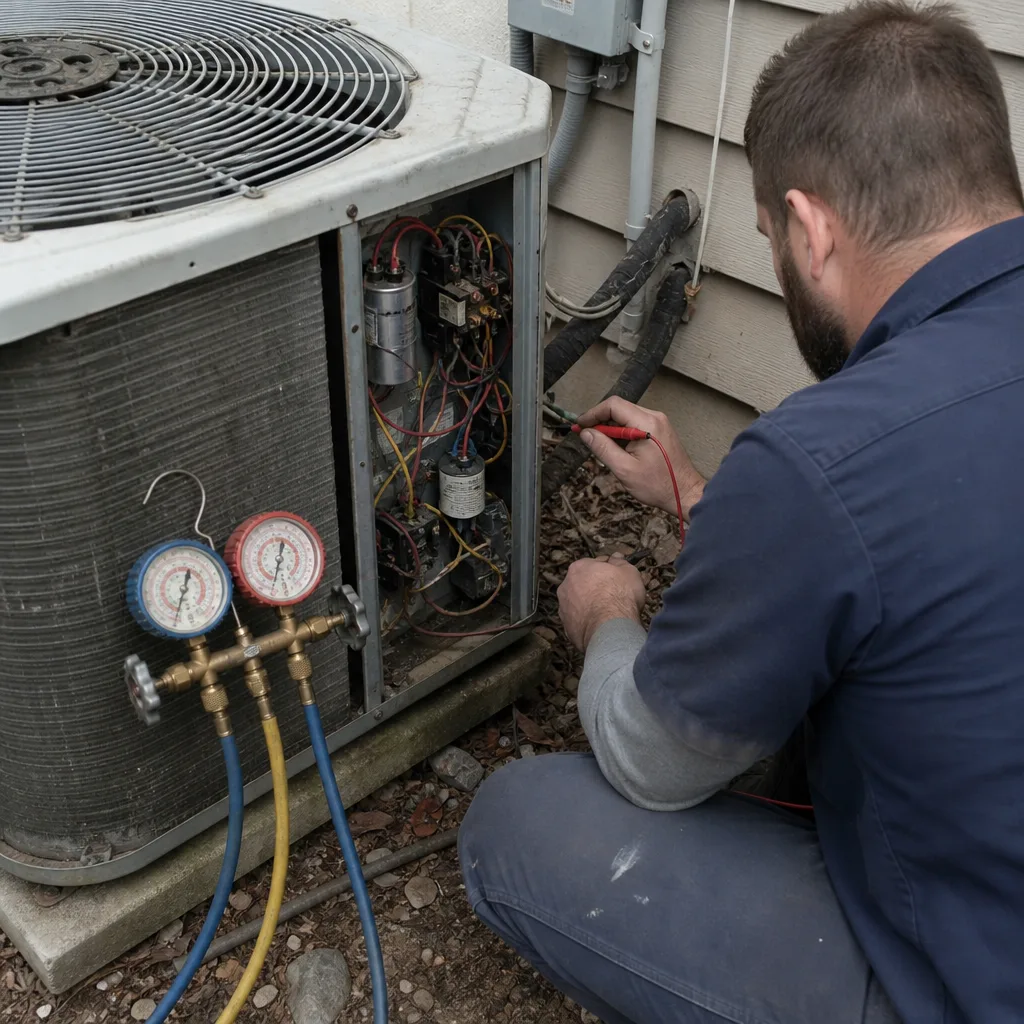
See the difference
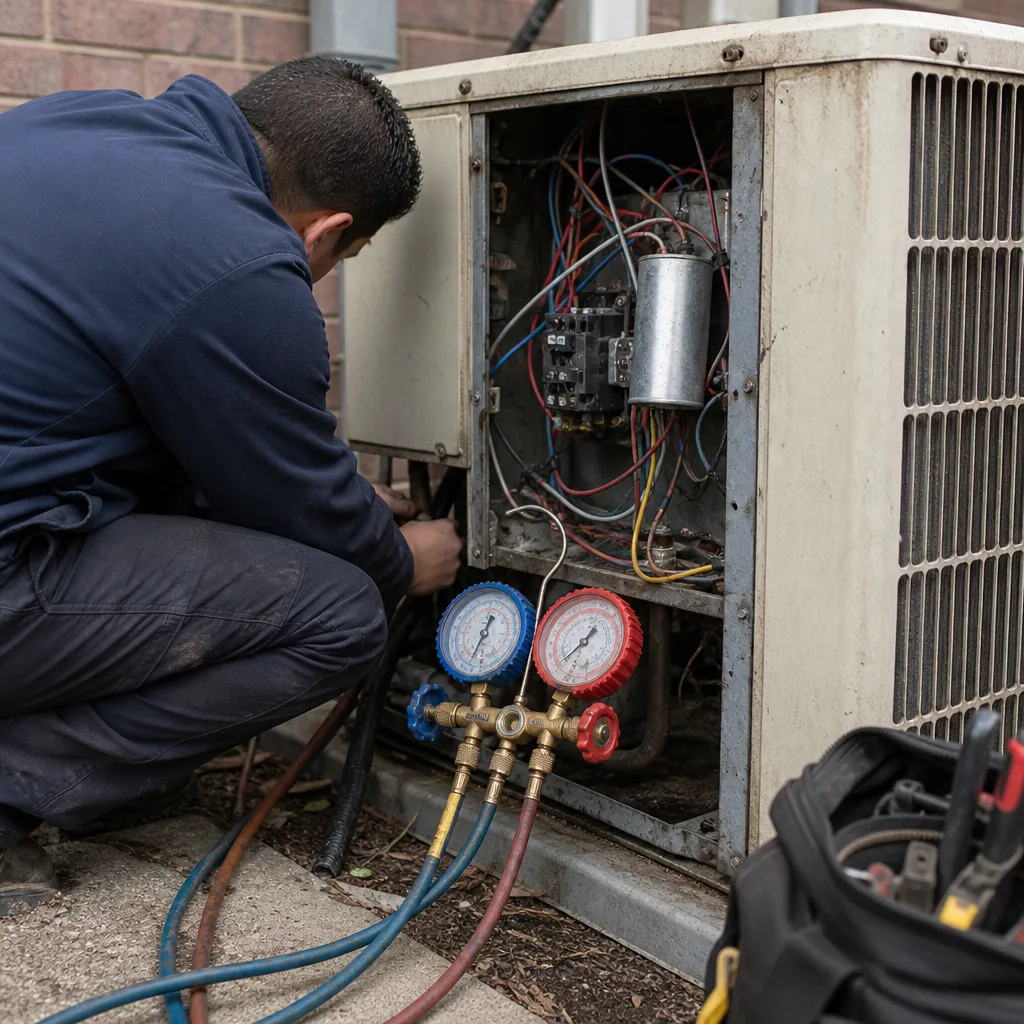 Before
 After
 Before
 After
 Before
 After
When to Call a Professional
Brand selection is a decision you can research, but the diagnosis that drives it needs a technician. If your system is failing, if a new unit needs sizing, or if you want an honest opinion on repair versus replacement, that’s the moment to call. We provide free estimates in Lewisville, and our technicians have up to 15 years of experience across all nine major residential brands. Call (844) 761-3596. We answer 24/7. Fast dispatch from 7am to 7pm, Sunday through Friday.
We also work alongside you if you’re already mid-decision. If you’ve had one quote for a replacement and want a second opinion on whether the existing system can be repaired, that’s a straightforward call. Our AC repair work is the foundation of what we do, and our AC installation service is where sizing and brand choices get finalized. If you’re comparing brands, bring us what you’ve got.
Frequently Asked Questions
For most Lewisville homeowners, the best brand is one with broad local parts availability and standard components, properly sized by a contractor who knows your home’s load. Carrier, Trane, Lennox, Goodman, Rheem, York, Daikin, Bryant, and American Standard all have service networks in the DFW area, and any competent technician can work on them. Brand matters less than correct sizing and installation quality. Call (844) 761-3596 for a free estimate.
Ask the contractor directly whether the indoor and outdoor units use a manufacturer-specific communicating protocol or standard 24-volt controls. Standard systems are easier to service because any qualified technician can work on them, while proprietary systems often require the manufacturer’s thermostat and a dealer relationship. If you can’t get a clear answer, that’s a warning sign. Call us to walk through your specific brand.
The workmanship warranty, not the equipment warranty, is what usually protects you in the first few years, because most failures trace to installation (refrigerant charge, brazing, duct work) rather than manufacturer defects. The equipment warranty covers parts, often without labor. Ask for both warranties in writing before you sign. Call (844) 761-3596 for honest guidance on comparing quotes.
No. SEER2 measures efficiency under standardized testing conditions, but it says nothing about whether the equipment is correctly sized for your home. A properly sized mid-efficiency system outperforms an oversized high-efficiency one in comfort and reliability. Ask for the Manual J load calculation before comparing SEER2 numbers. Call us for a free estimate if you’re unsure whether your current system is sized right.
Repair is usually worth considering first, especially if the equipment is a common brand with parts available locally and the failure is a standard component like a capacitor, contactor, or blower motor. Replacement makes sense when the system is nearing end of life, has multiple simultaneous failures, or needs a refrigerant the market no longer supports. An honest diagnosis beforehand is the right first step. Call (844) 761-3596 for a straight answer.
Yes, and it’s worth knowing about. Many manufacturers run volume and dealer incentive programs that can influence which brand gets recommended. Ask why a specific brand is being recommended, what the alternative would be, and whether the contractor is a factory-authorized dealer with volume commitments. A contractor who recommends one brand but can explain why another would also work is showing reasoning, not just a program. Call (844) 761-3596 for a brand-neutral second opinion.
The Bottom Line
HVAC brand choice matters, but not in the way most marketing suggests. What matters most is whether a qualified technician can service your brand without proprietary tooling or dealer-only parts, whether the unit is sized correctly with a Manual J calculation for your specific home, and whether the workmanship warranty backs up the installation. Lewisville homeowners have access to broad DFW-area parts distribution for all nine major residential brands, so the practical differences between them are smaller than the differences between contractors. Choose the technician as carefully as the equipment, get both warranties in writing, and let repair-first logic drive your decision when the existing system can be fixed. Get the brand pitch out of the way and get a proper diagnosis instead.
For more on the broader service mix we cover, take a look at what Rutherford AC Repair does. We work on the brand you already have, and we’re not going to steer you toward one that benefits us more than you.
Ready to make a decision on solid footing? Call Rutherford AC Repair at (844) 761-3596 for a free estimate. We answer 24/7. Fast dispatch from 7am to 7pm, Sunday through Friday.
Written by the team at Rutherford AC Repair.