
Last updated November 15, 2026
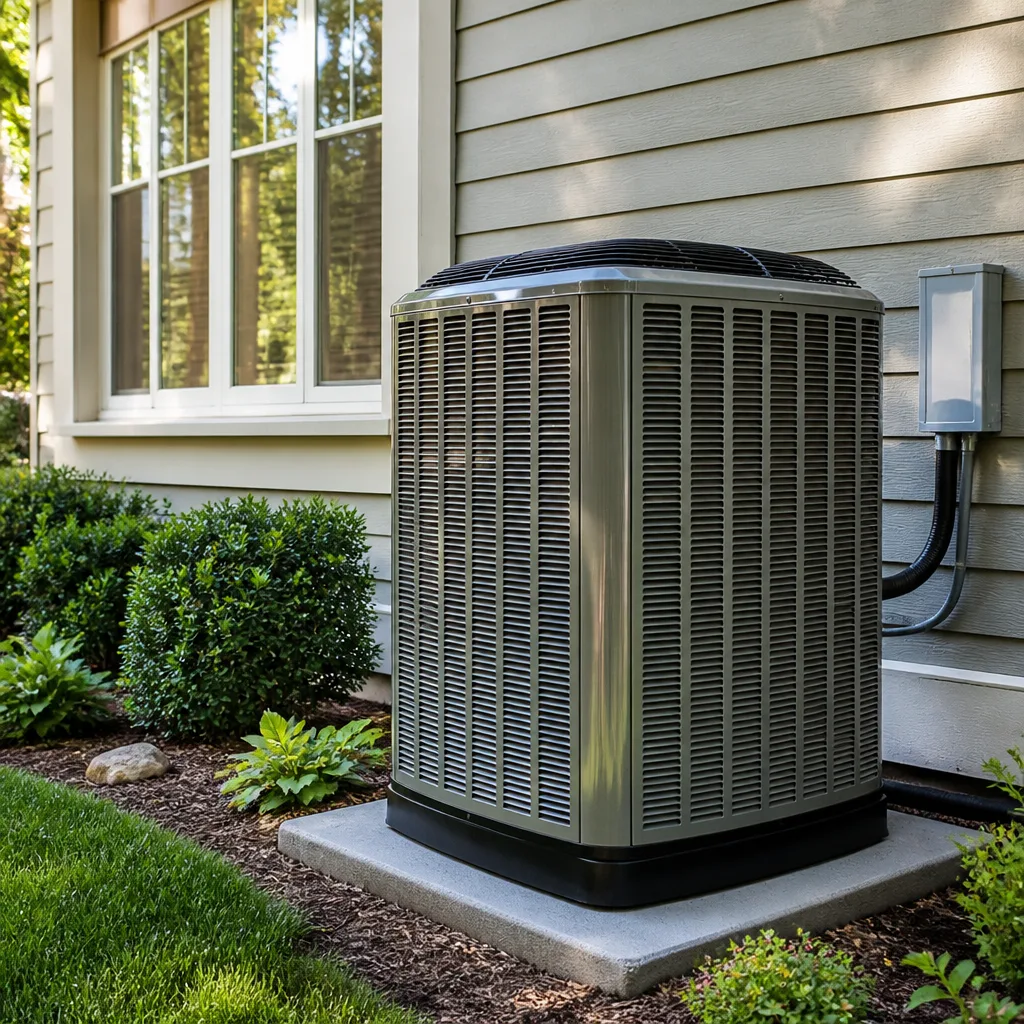 AC repair
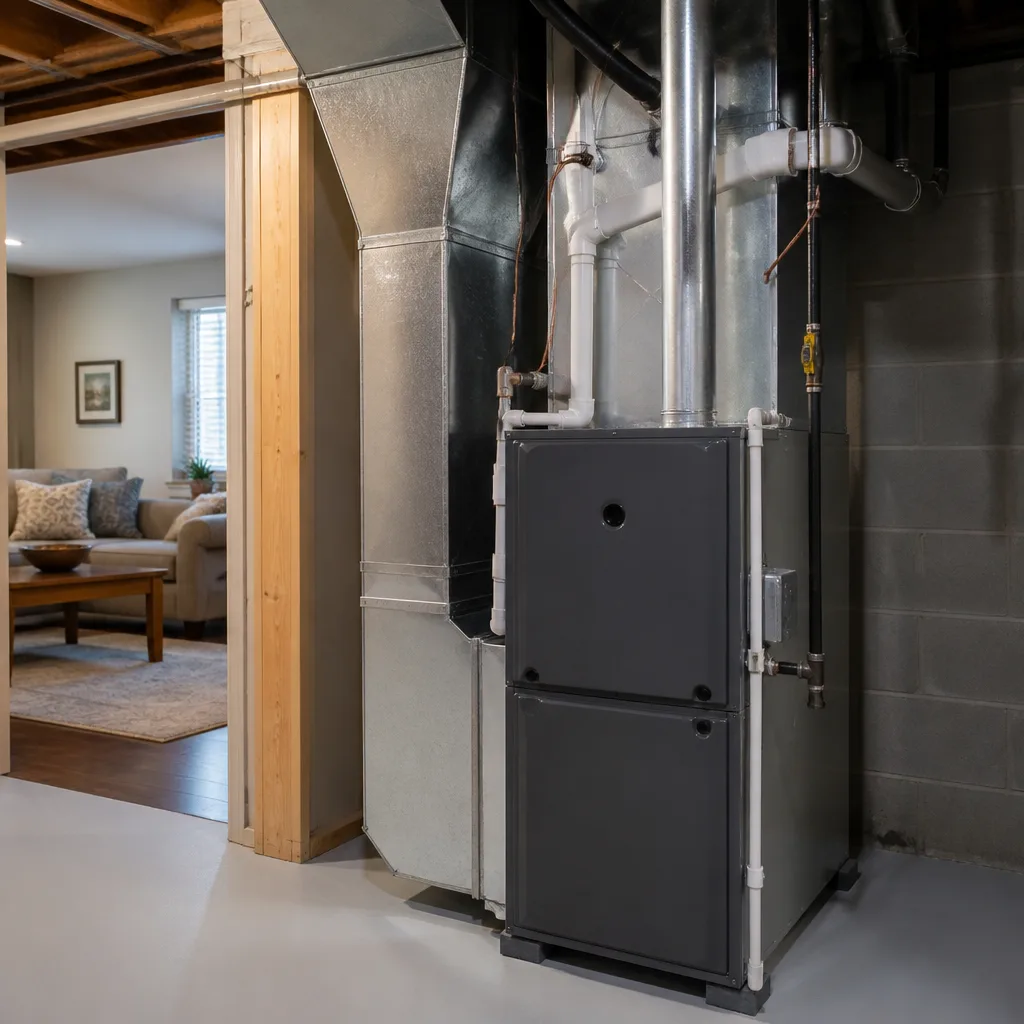 Furnace & heating
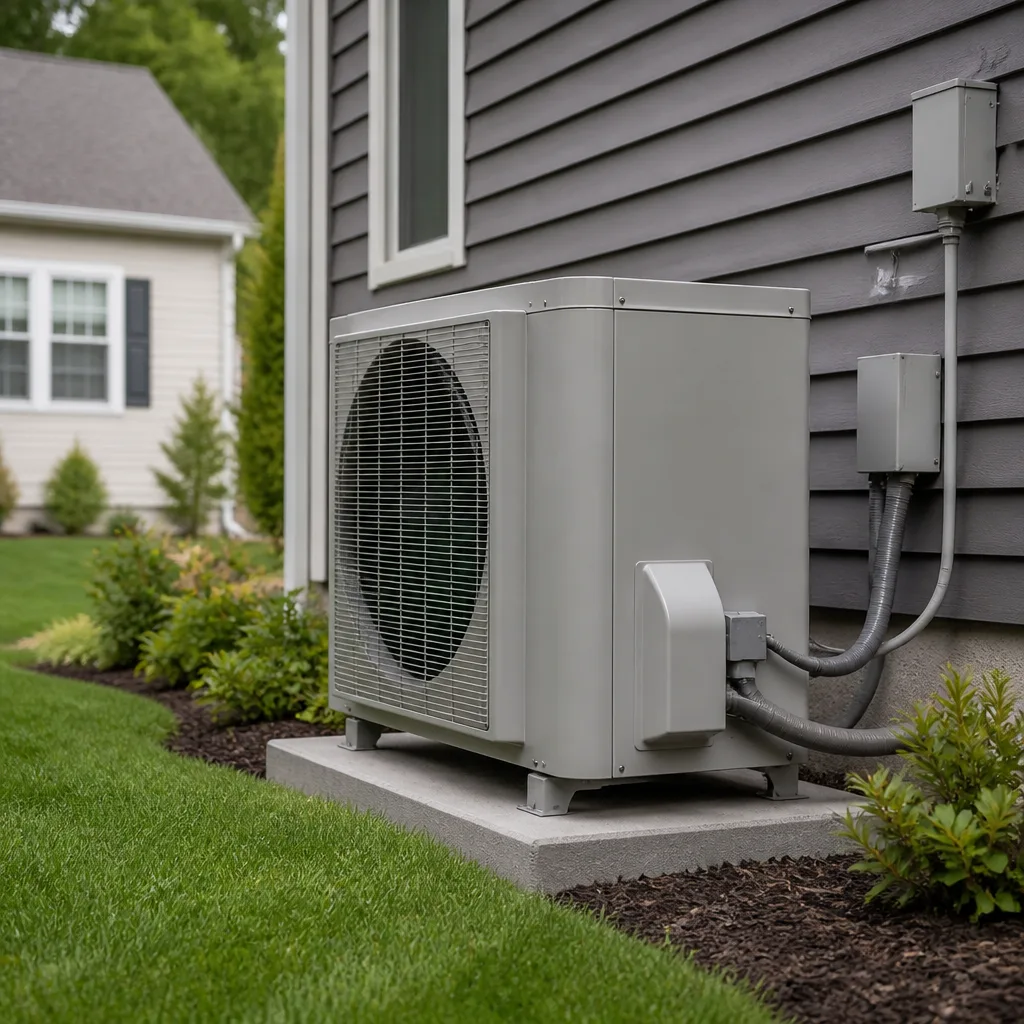 Heat pumps
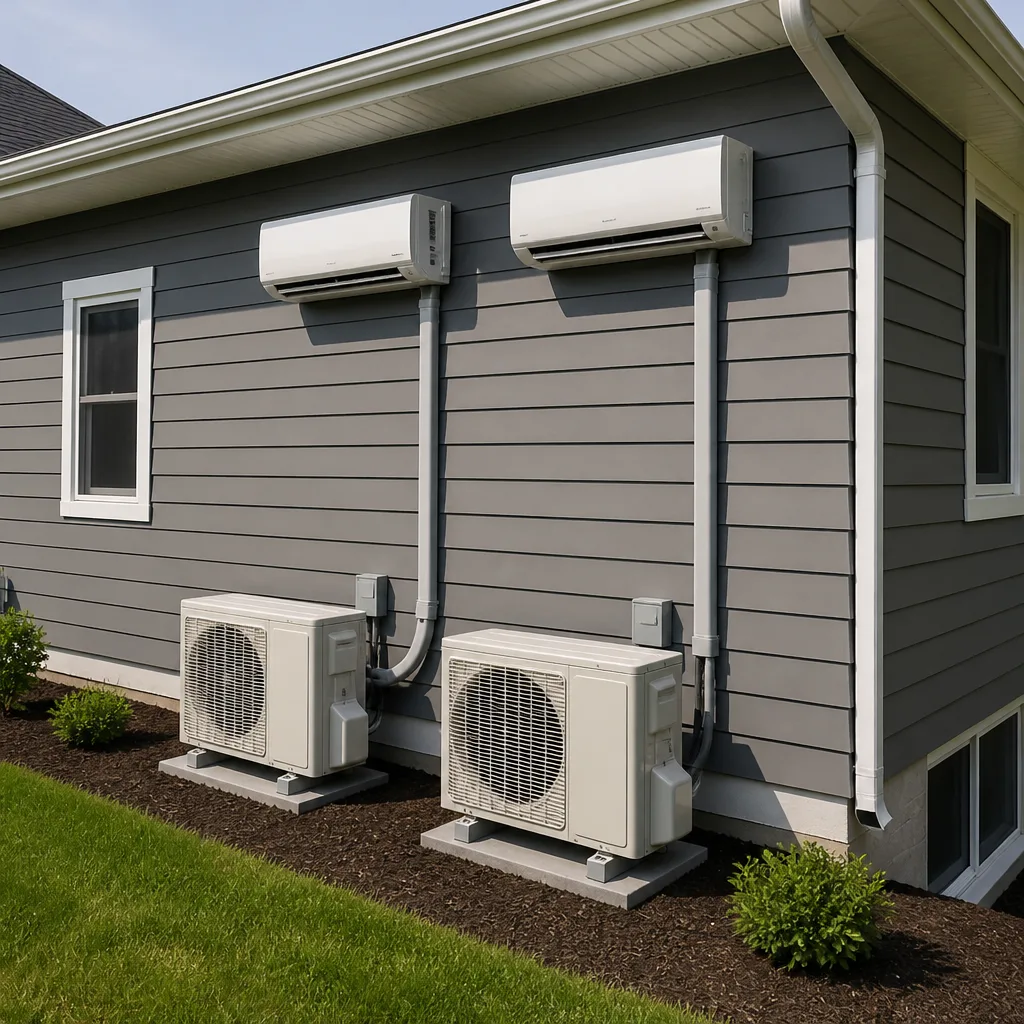 Ductless mini splits
 Carrier
 Trane
 Goodman
Seasonal tune-up and full diagnostic on your Carrier, Trane, or Goodman system - readings shown to you before any repair is proposed
Diagnosis first, numbers second - you approve the repair price before a single part goes in.
Get your free estimateHVAC Warning Signs: A Lewisville Homeowner’s Reference Guide
If your system is short-cycling – running for two or three minutes, shutting off, then restarting – that single behavior narrows the likely cause to fewer than five components. Most warning-sign articles list symptoms and stop there, leaving you to guess what they mean. This guide works backward. For each common complaint, we explain the mechanical reason behind it, so you can describe what’s happening accurately and recognize whether the diagnosis you’re handed actually matches the evidence. Lewisville homes sit through long, humid summers and mild winters, and that pattern puts specific stress on cooling systems. By the end, you’ll know which signs mean “schedule a visit” and which mean “shut it off now.”
Quick Answer
The most important HVAC warning signs are short cycling, warm air from the vents, ice on the outdoor unit, grinding or screeching noises, climbing electric bills, musty or burning odors, clammy indoor air, and rooms that never cool evenly. Each symptom points to a limited set of causes – some are minor adjustments, some are refrigerant or electrical faults that need a technician. A handful are true emergencies where you should shut the system off before anyone arrives.
Styles & brands we work with
- AC repair
- Furnace & heating
- Heat pumps
- Ductless mini splits
- Carrier
- Trane
- Goodman
Table of Contents
- Short Cycling: What It Tells You Before You Call
- Warm Air From the Vents: Charge or Airflow?
- Ice Buildup: Why It Happens in Hot Weather
- Unusual Noise: Grinding, Screeching, and Clicking
- Strange Odors: Burning vs. Musty vs. Mechanical
- High Bills and Uneven Cooling: The Airflow Picture
- Schedule Soon vs. Shut It Off Now: A Triage Framework
- How to Describe a Symptom So It Gets Fixed Faster
Short Cycling: What It Tells You Before You Call
Short cycling means the system reaches its target, shuts off, then restarts within minutes – often before the house has actually cooled or warmed. The mechanical cause is almost always one of a short list: a thermostat reading wrong, an oversize system, a restricted air filter, low refrigerant, or a compressor with a failing safety switch. That short list matters because it changes the conversation. If you tell a technician “it’s short cycling,” they can rule out a large chunk of the system before they even arrive.
Start with the cheapest, simplest check. A clogged filter starves the indoor coil of air, the coil gets cold, and the system can shut off on a safety to protect itself. Airflow restriction is behind a surprising share of cycling complaints, and it costs almost nothing to rule out. Replace a visibly loaded filter and watch for one cycle before calling.
If the filter is clean and the cycling continues, note the pattern – the exact run time before shutoff, how often it restarts, and whether it happens only in the hottest part of the afternoon. In Lewisville, an undersized return duct can cause cycling when outdoor temperatures peak and the system can’t move enough air to keep up. That’s an airflow problem, not a refrigerant problem, and the fix is very different.
An oversize system is another common culprit, especially in homes where a prior replacement was matched by square footage rather than by a load calculation. An oversize unit cools fast, satisfies the thermostat quickly, then restarts – never running long enough to pull humidity out of the air. That combination shows up as short cycling plus a house that feels cool but clammy. If that’s your pattern, it’s worth flagging both symptoms together.
- Stat reading wrong: thermostat is out of calibration or placed on a sunlit wall.
- Airflow restriction: clogged filter, blocked return, or undersize duct.
- Low refrigerant: system shuts off on a low-pressure safety.
- Oversize equipment: cools too fast and never runs a full cycle.
- Compressor fault: internal overload trips after a short run.
We work on the brand you already have – Carrier, Trane, Lennox, Goodman, Rheem, York, Daikin, Bryant, and American Standard – so a cycling diagnosis with a Goodman or a York is a familiar path rather than a guess. When it’s time to have someone look, you can book AC repair and describe the pattern up front.
Warm Air From the Vents: Charge or Airflow?
Two completely different problems produce the same symptom: warm air from the registers. One is a refrigerant charge issue, the other is an airflow restriction. Telling them apart with a few simple checks keeps a technician from chasing the wrong repair – and keeps you from paying for a recharge you didn’t need, or a duct fix that won’t solve a low-charge problem.
Here’s the distinction that matters:
- Charge issue: the outdoor coil runs but the suction line is cold and sweating, or the system never seems to get colder no matter how long it runs. Warm air from every register, evenly.
- Airflow restriction: some rooms blow strong and cool while others barely move air. A blocked filter, closed damper, or crushed flex duct on one branch.
Run the airflow check first, because it’s free. Walk your home and hold a hand to each register. If one or two rooms are weak while others are fine, suspect the branch serving those rooms. If every register moves plenty of air and it’s all warm, the restriction isn’t the likely cause, and the charge side deserves attention.
Next, look at the filter and any manual dampers in the ductwork. A damper accidentally left closed after a prior repair will starve one zone without touching the rest of the house. If those check out and the system is still blowing warm everywhere, the likely answer is refrigerant – which is a technician’s job, not a homeowner project. Refrigerant handling requires recovery equipment and certification, and it’s not something to attempt yourself.
One more scene: warm air only in the afternoon, cool again by evening. That’s often a system working near its capacity limit in peak Lewisville heat, not a fault at all. If the house was comfortable in spring and struggles only in July and August, the question becomes sizing and insulation, not repair.
Our technicians have up to experience and diagnose charge and airflow faults as separate problems, not one. If you’re weighing a fix against a replacement, AC installation information is worth reading once you know which side of the ledger you’re on.
Ice Buildup: Why It Happens in Hot Weather
Ice on the outdoor unit in the middle of a Lewisville summer looks like a contradiction. It isn’t. Ice forms because the coil is running colder than the air around it – which happens when the system is starved for airflow or low on refrigerant. A coil that’s too cold condenses moisture out of the air, and that moisture freezes. Ice is a symptom of an underperforming coil, not a sign the system is over-cooling.
Because both low charge and restricted airflow can freeze the same coil, ice alone doesn’t tell you which. The other symptoms do. If the filter is loaded or a return is blocked, airflow is the likelier cause. If airflow is clean and the ice keeps returning, refrigerant is the likelier candidate. Either way, the first move is the same.
What to do when you see ice:
- Turn the cooling off at the thermostat. Running a frozen coil can flood the compressor with liquid refrigerant, which is one of the fastest ways to turn a repair into a replacement.
- Leave the indoor fan running so air moves over the coil and helps the ice melt, if your thermostat allows fan-only mode.
- Check the filter. Replace it if it’s visibly loaded.
- Call for service before you turn cooling back on. If ice returns after a thaw, the underlying cause wasn’t airflow.
Do not chip ice off the coil. The fins are thin aluminum, and bending or puncturing them turns a slow repair into a coil replacement. And do not add refrigerant yourself – that’s not a homeowner job, and overcharging a system can damage the compressor. Refrigerant work needs recovery equipment and proper gauges.
If you find ice and the ice is the only symptom, this is a “schedule soon, run fan-only in the meantime” situation. If you also hear grinding or smell burning at the same time, treat it as a shut-it-off emergency. Either way, note when the ice formed and how fast it returned after a thaw – that detail helps a technician decide between airflow and charge before touching the system.
Unusual Noise: Grinding, Screeching, and Clicking
Noises carry some of the most direct mechanical information of any symptom. A grinding sound is metal on metal – almost always a blower bearing or a failing motor. A screech is a slipping belt or a dry bearing. A clicking that repeats and never settles is often an electrical switch or a relay cycling. The specific sound tells a technician where to look, so describe it in those words.
One noise deserves special attention: the rapid click of a system trying to start and failing. If you hear the outdoor unit click, try to start, click again, and repeat without ever running, that pattern usually points to a capacitor, a contactor, or a compressor that’s locked up. It’s a “shut it off and call” pattern – repeated failed starts put heavy electrical load on the components.
Humming that gets louder and stays loud, without the fan turning, is the same picture. Grinding on the indoor blower while the outdoor unit runs normally is different: the compressor is fine, the blower is struggling. Either is worth prompt attention.
- Grinding: bearing or motor – the moving metal is telling you it’s failing.
- Screeching: slipping belt or dry bearing.
- Repeated clicking with no start: capacitor, contactor, or compressor lockout.
- Loud humming without fan movement: failed start, seized motor.
- Rattle or hum in the walls: loose duct or a vibrating panel – usually minor, but worth checking.
Don’t run a system through a grinding noise hoping it clears. Bearings that grind tend to seize, and a seized blower motor can burn out its control board. If the noise is coming from a Rheem or a Daikin system you own, describe the sound when you call – technicians who know those units can often name the failing part before the visit.
For noises, the accurate description is what gets you the right repair. Write it down: what the sound is, where it comes from, and whether it happens on startup, mid-cycle, or on shutdown. “It screeches for about ten seconds on startup, then runs quiet” tells a technician more than a paragraph of worry. If you have a phone handy, record the sound while the system runs – it’s a genuinely useful thing to hand over.
Strange Odors: Burning vs. Musty vs. Mechanical
Odor is where triage matters most, because one smell means “wait for an appointment” and another means “turn it off now.” Here’s the practical map, organized by urgency.
- Electrical burning smell (or a hot-plastic smell): Shut it off now. This points to a wire, relay, or motor winding overheating. It can be a precursor to a fire, and it’s not something to leave running while you wait for a visit.
- Musty or dirty-sock smell: Schedule soon. Moisture is sitting on the evaporator coil or in the drain pan. Left alone, it feeds biological growth and can affect indoor air quality. Not an immediate danger, but persistent.
- Mechanical grinding with a hot smell: Shut it off now. A motor or bearing may be failing and overheating. Same rule as electrical burning.
- Rotten-egg smell near a gas furnace in winter: Shut it off, leave the area, and call your gas utility from a safe location. That’s a fuel smell, not an HVAC comfort complaint.
Musty smell in a Lewisville home is common through the cooling season. The coil condenses a lot of moisture out of humid air, and the drain pan is designed to carry it away. When a drain line clogs or the pan doesn’t slope correctly, water sits. Sitting water is where the smell comes from. A technician clears the drain, cleans the affected surfaces, and confirms the pan drains properly – the smell usually follows.
A musty smell that returns every season is worth mentioning at the next service call. It often means drainage or coil cleanliness rather than anything worse, but a technician can confirm on-site.
A burning smell during cooling is more serious than the same smell during heating in the sense that it’s less expected. Resist the urge to “let it run a bit and see.” Shut off the thermostat, and call. The Rutherford AC Repair team treats an electrical smell as a shut-it-off signal and gets a technician out as fast as the schedule allows.
High Bills and Uneven Cooling: The Airflow Picture
Bill creep and warm rooms tend to travel together, and both usually trace back to the same two suspects: airflow and system efficiency running below spec. A system moving less air than it should runs longer, uses more electricity, and never quite balances the house. Fix the airflow and both complaints often shrink at the same time.
Here’s how a homeowner can split the two most common causes of uneven cooling – airflow balance versus running efficiency:
- Compare room-to-room air output. Strong air in some rooms and weak in others points to duct balance: closed dampers, crushed flex duct, a disconnected boot, or a return that’s too small.
- Look at the filter and the outdoor coil. A dirty filter or a coil packed with grass clippings and cottonwood restricts airflow system-wide. Both are quick to check.
- Note the pattern of high bills. Bills climbing steadily over a season points to efficiency drift – dirty coil, restricted filter, a system running longer cycles than it should.
- Note the pattern of comfort. Whole-house warm air in peak heat points to capacity and insulation; warm rooms with strong air everywhere point to the system working but the house losing the cool.
Duct balance is the one most homeowners overlook. A damper closed in a far closet after an earlier repair starves that room permanently, and a technician looking only at the equipment won’t spot it. Walking the house and feeling the registers is worth doing before the visit, because it tells the technician where to look.
In our experience, a system that never quite cooled well and then spikes on the electric bill in August is either a coil that’s dirty, a refrigerant circuit that’s slowly lost charge, or a house that’s leaking cool air through the attic. Those are three different repairs. Accurate description on the phone cuts out the wrong path before the visit.
One more angle: if your bill goes up but the house feels fine, suspect a high-side pressure issue or a system running near its limit. Both show up on gauges but not on your comfort. That’s a diagnostic-visit question rather than something you can confirm yourself.
Schedule Soon vs. Shut It Off Now: A Triage Framework
Before anyone arrives, you can sort most warning signs into one of three buckets: leave it running while you book a visit, turn it off and book a visit, or turn it off and treat it as urgent. That framework matters because running a system with the wrong fault can turn a repair into a replacement.
Schedule soon (you can leave it running):
- Mild bill creep without a comfort complaint.
- One or two rooms that cool less than the rest.
- Musty smell that doesn’t get worse.
- Occasional minor rattle.
Turn it off, book a visit:
- Ice on the outdoor unit.
- Short cycling that’s getting more frequent.
- Weak cooling from every register.
- Repeated attempts to start that never catch.
Turn it off and treat as urgent:
- Electrical burning smell.
- Grinding noise from the blower or compressor.
- Water pooling around the indoor unit.
- Any gas smell near a furnace (leave the area, call your utility first).
The rule of thumb: anything that suggests overheating, sparking, or dying metal gets shut off. Anything that just means “not quite right” can run while you book. Don’t run a frozen coil, and don’t keep starting a system that refuses to start.
If you’re not sure which bucket your symptom belongs in, describe it and ask. It’s a better use of a phone call than guessing. Lewisville’s long cooling season is hard on systems, and most calls we take are answered with “here’s what to shut off, here’s when we can come.”
How to Describe a Symptom So It Gets Fixed Faster
Accurate description gets a technician closer to the right diagnosis before the visit, which usually means a faster fix and a shorter trip for the parts. It also, honestly, tells you whether the diagnosis you get back matches the evidence you described.
Here’s the short list of what to have ready when you call:
- The symptom, in plain words. “The outdoor fan runs but the air is warm” beats “it’s broken.”
- The timeline. When it started, and whether it’s been gradual or sudden.
- The pattern. Does it happen on startup, mid-cycle, or at the hottest part of the day?
- What you’ve already checked. Filter, breakers, thermostat settings, dampers.
- Anything you’ve recently changed. A new filter, moved furniture, a recent repair, a new appliance.
- The brand. Especially useful – Goodman, Rheem, York, and Daikin systems all respond to different known quirks.
If the symptom is intermittent, write down what happens just before it appears. “It short cycles every time the dryer runs” is a detail that points to pressure and return-air balance. “It only does it in the afternoon” points to capacity versus outdoor temperature. Small patterns are direction.
Then, when the diagnosis comes back, compare it to what you described. If you told the technician “warm air in every room and the outdoor coil never ices,” and the diagnosis is a fan-only airflow restriction, ask how the evidence supports it. A technician working from good information should be able to connect the symptom to the cause. That’s the test the rest of this guide is built around – matching evidence to the fix.
If a technician can’t connect the diagnosis to the symptom, get a second look. Some diagnoses arrive with a replacement pitch attached; a repair-first technician should walk you through why the symptom points where it does before talking about replacement.
Common Mistakes to Avoid
- Running a frozen system. Ice on the coil is a “shut it off” signal, not a “wait and see.” Continuing to run the system with a frozen coil can flood the compressor and turn a repair into a replacement.
- Topping off refrigerant as a “solution.” If a system is low on charge, it lost refrigerant somewhere. Recharging without finding the leak treats the symptom and hides the cause. Refrigerant handling also requires recovery equipment – not a homeowner job.
- Ignoring short cycling because the house still gets cool. Short cycling is harder on components than steady running, and it usually means a fault is present that may grow. Listen for the cycle pattern, not just the temperature.
- Assuming one weak room means a failing system. Warm rooms with strong air often point to a closed damper or a crushed duct, not a failing unit. Check the simple things before the diagnosis gets serious.
- Smelling something burning and “waiting to see if it clears.” Electrical burning smells are a shut-it-off signal. Turn the thermostat off, and call.
- Describing the symptom in the vaguest possible terms. “It’s not working” means extra diagnostic time. The more specific the description, the faster the diagnosis, and the more confident the technician can be.
- Jumping to replacement before diagnosis. Many of the symptoms in this guide – short cycling, ice, weak airflow in one zone – are repairable. A repair-first technician looks at the cause before talking about a new system.
See the difference
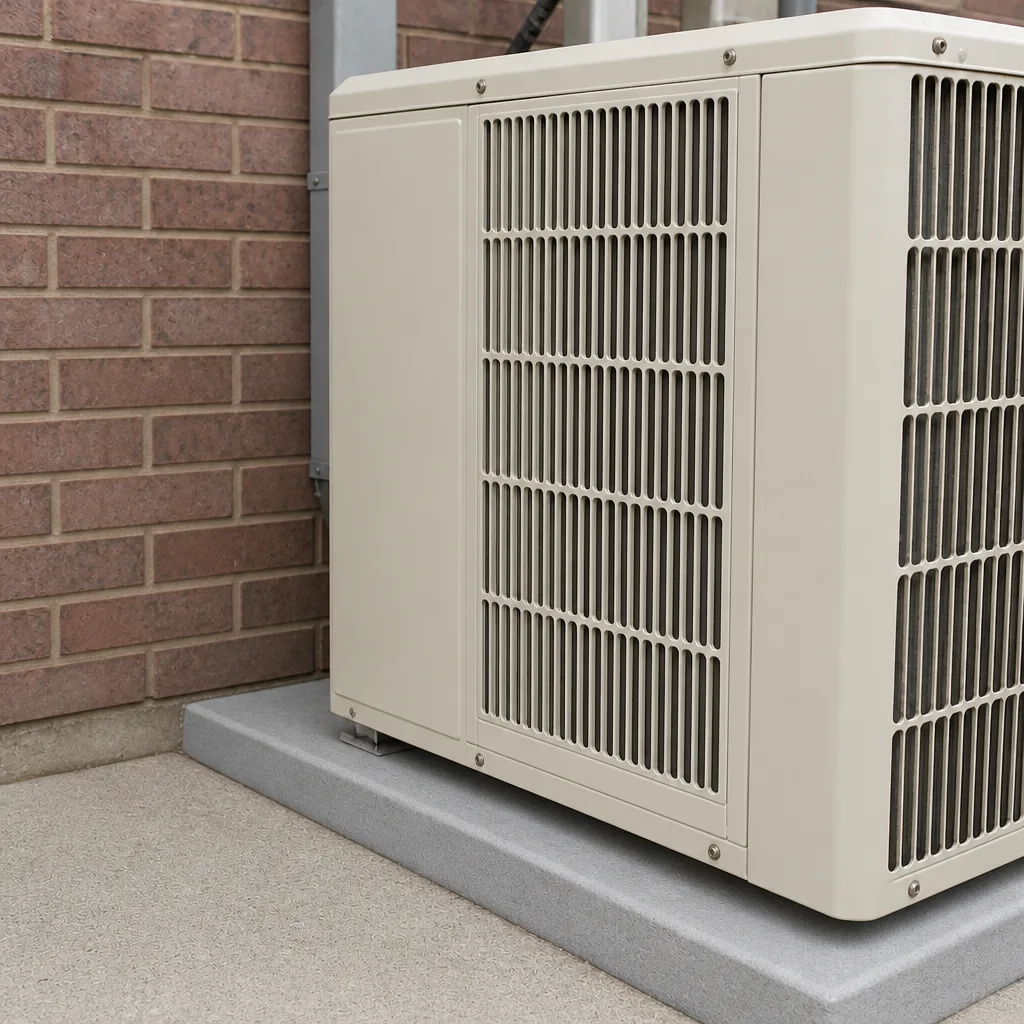
 Before
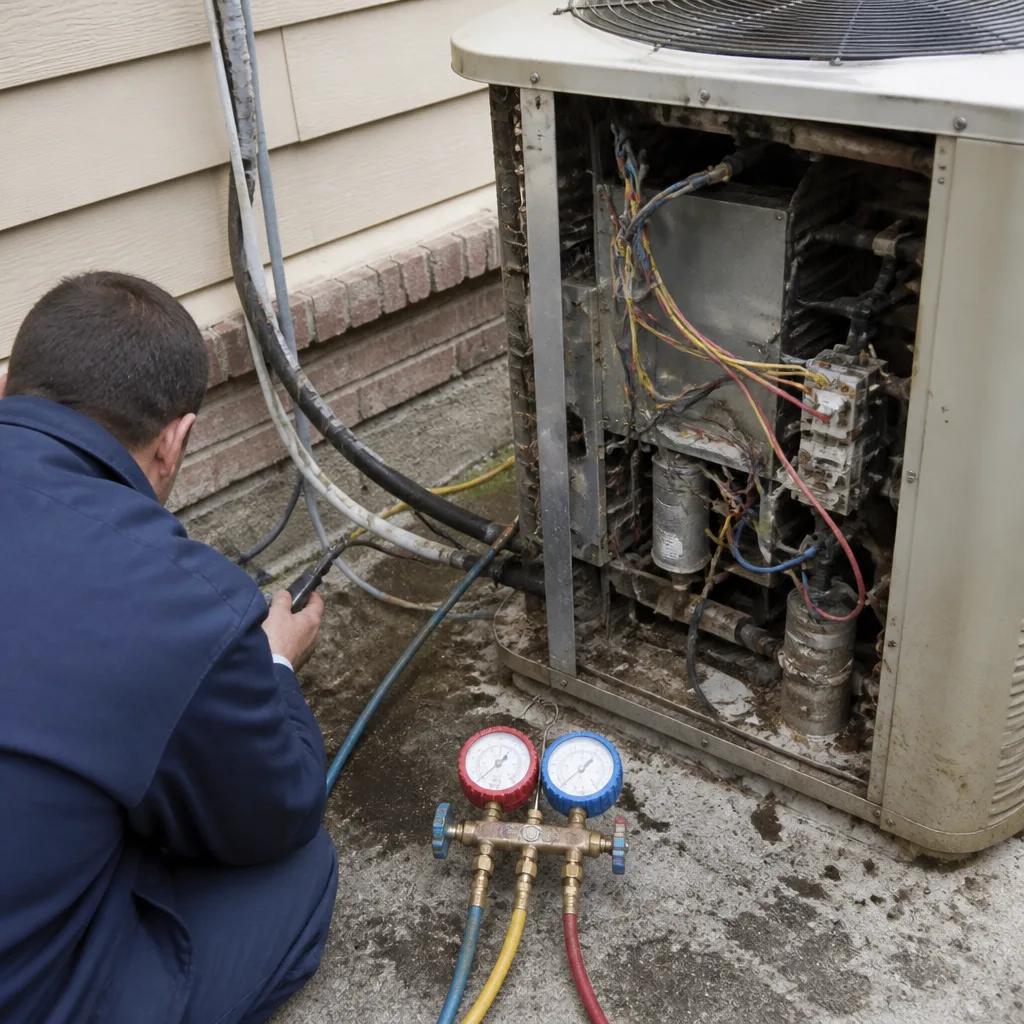
 After
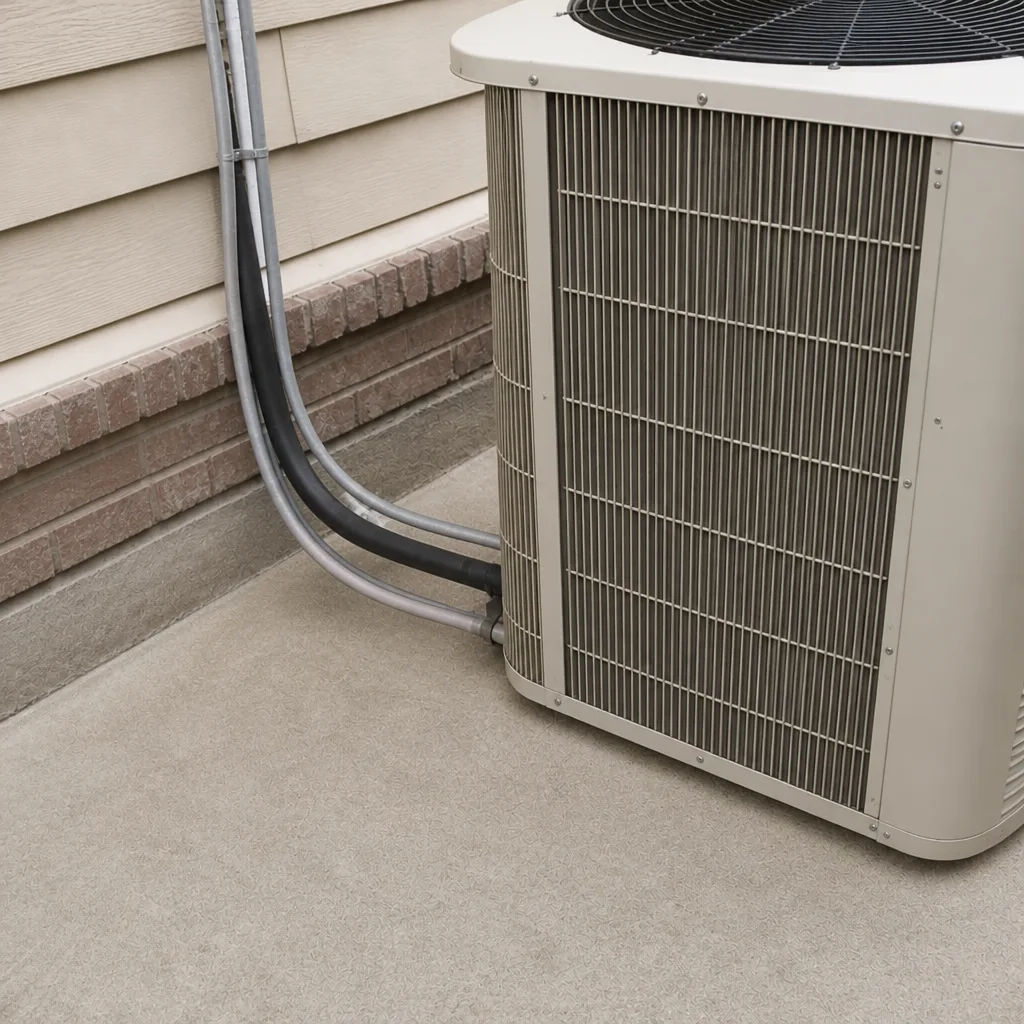
 Before
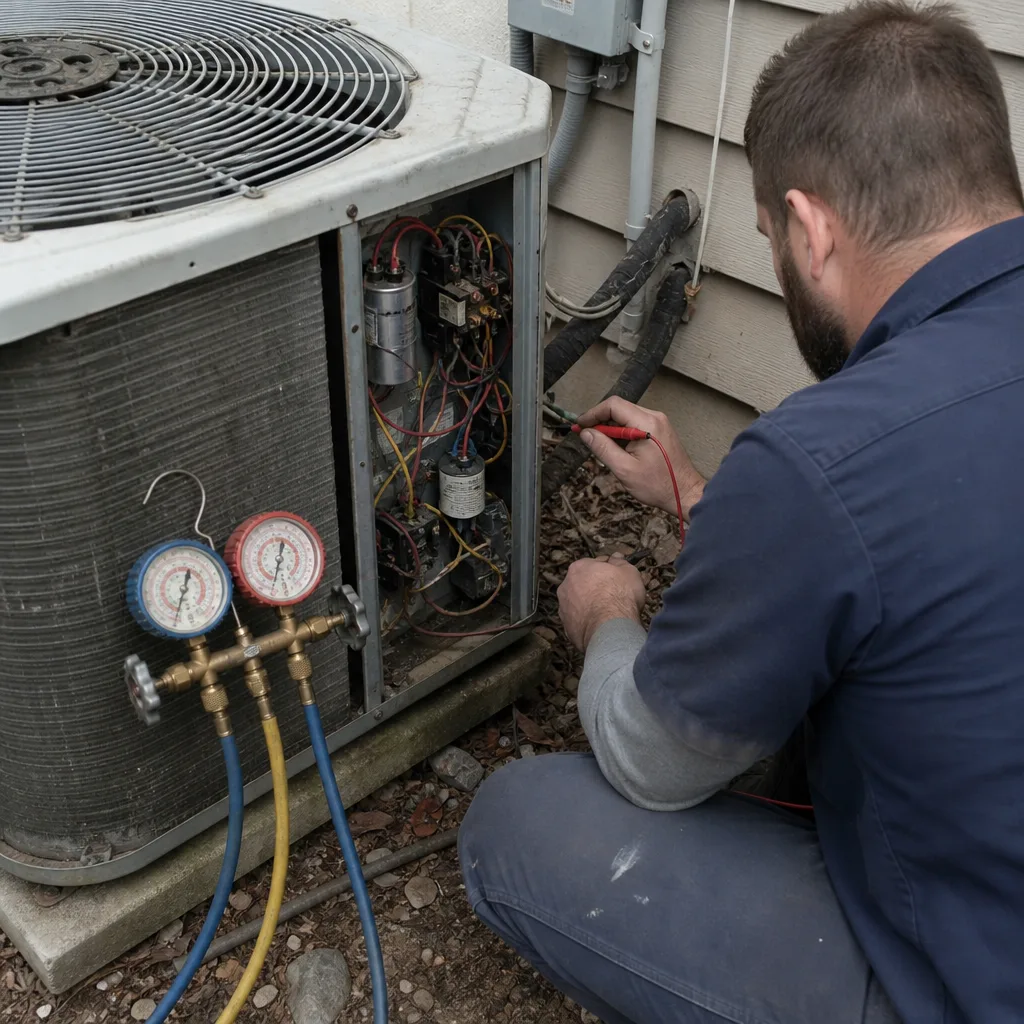
 After
 Before
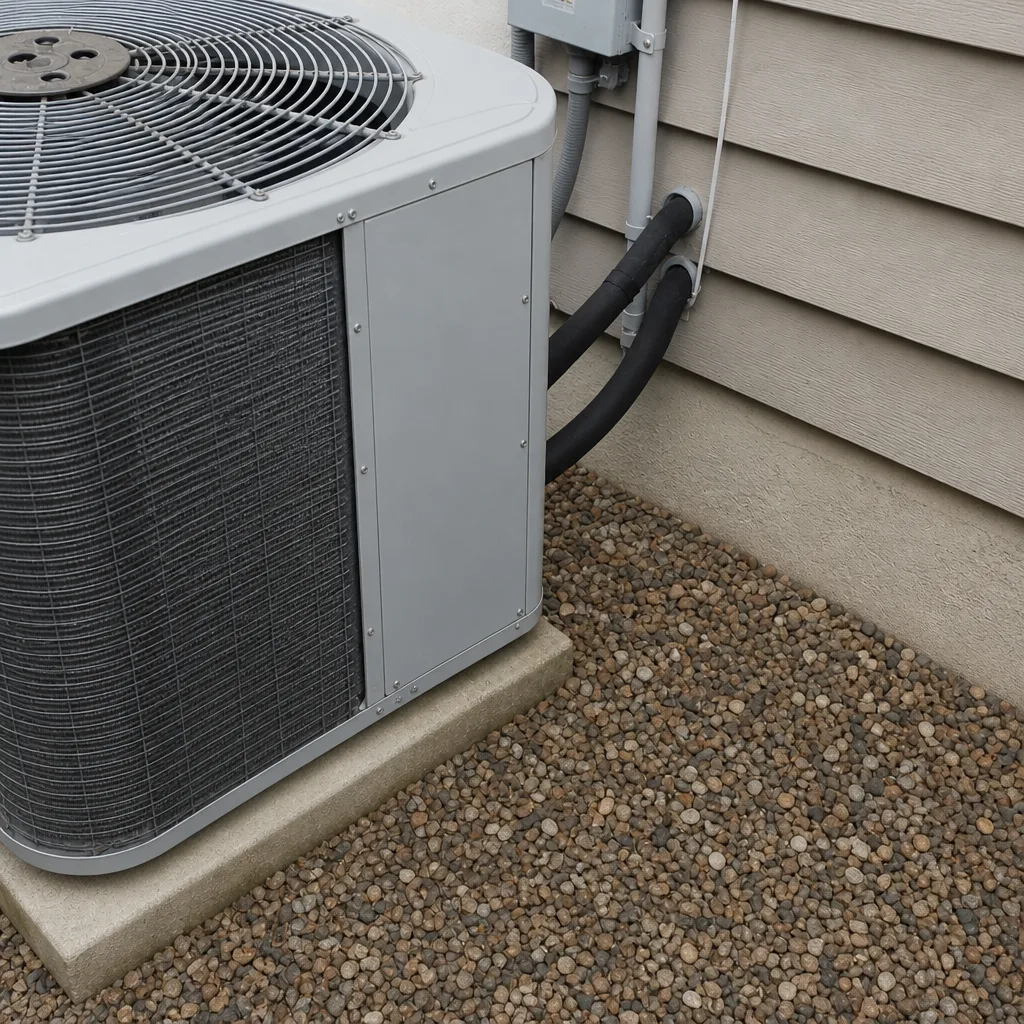 After
When to Call a Professional
Call a professional for anything involving refrigerant, electrical components, the compressor, or the gas side of a furnace. Refrigerant recovery and charging require equipment and certification. Electrical faults – burning smells, repeated failed starts, sparking – are a safety issue, and a technician should trace them. Compressor and blower motor work belongs to trained hands. On the gas side, a fuel smell is your gas utility’s call first, before any HVAC professional.
Call sooner rather than later for short cycling that’s getting more frequent, ice that keeps returning after a thaw, or a system that refuses to start. Those tend to get worse, and the repair cost moves up with them. Lewisville summers don’t leave much slack – a failing system in a heat wave is a comfort problem first and an equipment problem second.
Rutherford AC Repair offers free estimates in Lewisville – call (844) 761-3596. We work on the brand you already have, and our technicians have up to experience across the nine most widely installed residential brands.
Frequently Asked Questions
Short cycling is when the system shuts off before completing a full cooling or heating cycle, then restarts within minutes. It’s not always an emergency, but it’s never normal. Common causes include a clogged filter, a misreading thermostat, low refrigerant, or an oversize system. It’s worth diagnosing because it puts more wear on the compressor than steady running. Call (844) 761-3596 for a free estimate – estimates are free, and a technician can narrow the cause quickly.
Ice forms when the coil runs colder than the surrounding air, which happens when the system is starved for airflow or low on refrigerant. It’s not a sign of over-cooling. Turn the cooling off at the thermostat, leave the indoor fan running in fan-only mode if you can, and call for service. Running a frozen coil can flood the compressor and cause bigger damage.
Airflow restrictions usually show up as some rooms strong and others weak, or weak air everywhere. Refrigerant issues usually show up as warm air from every register, evenly, no matter how long the system runs. Check the filter and the registers first. If airflow is even and clean, suspect the charge. Refrigerant work requires a technician. Call (844) 761-3596 for an exact quote – estimates are free.
Many of the signs in this guide – short cycling, ice buildup, uneven cooling – are repairable. Replacement makes sense when the compressor has failed, when refrigerant leaks can’t be reliably sealed, or when the system is undersized or oversize for the house. A repair-first technician looks at the cause before recommending replacement. That’s the default here – fixing what you have comes first.
We answer 24/7. Fast dispatch from 7am to 7pm, Sunday through Friday. Call (844) 761-3596 and describe your symptom – it helps us get the right information before the visit.
We routinely work on nine of the most widely installed residential brands: Carrier, Trane, Lennox, Goodman, Rheem, York, Daikin, Bryant, and American Standard. That’s the vast majority of systems in American homes, so you don’t need to hunt for a brand-specific specialist. If you’re in Lewisville and unsure of your system’s make, that’s fine – describe it when you call.
The Bottom Line
The best way to use this guide is to work backward from the symptom you’re noticing. Short cycling narrows to a short list of causes. Warm air everywhere points toward charge; warm air in one zone points toward airflow. Ice means shut it off. Electrical burning means shut it off now. A grinding noise means failing metal. Musty means moisture. Uneven cooling means duct balance or efficiency drift. Describe what you see accurately, note the pattern, and compare any diagnosis you receive against the evidence you gave.
If you’re in Lewisville and something in this guide sounds familiar, call (844) 761-3596 for a free estimate. We work on the brand you already have. We answer 24/7, with fast dispatch from 7am to 7pm, Sunday through Friday. Rutherford AC Repair covers AC repair, AC installation, and furnace repair – including a furnace check that keeps your heating season steady. Straightforward diagnosis, honest options.
Written by the team at Rutherford AC Repair.